
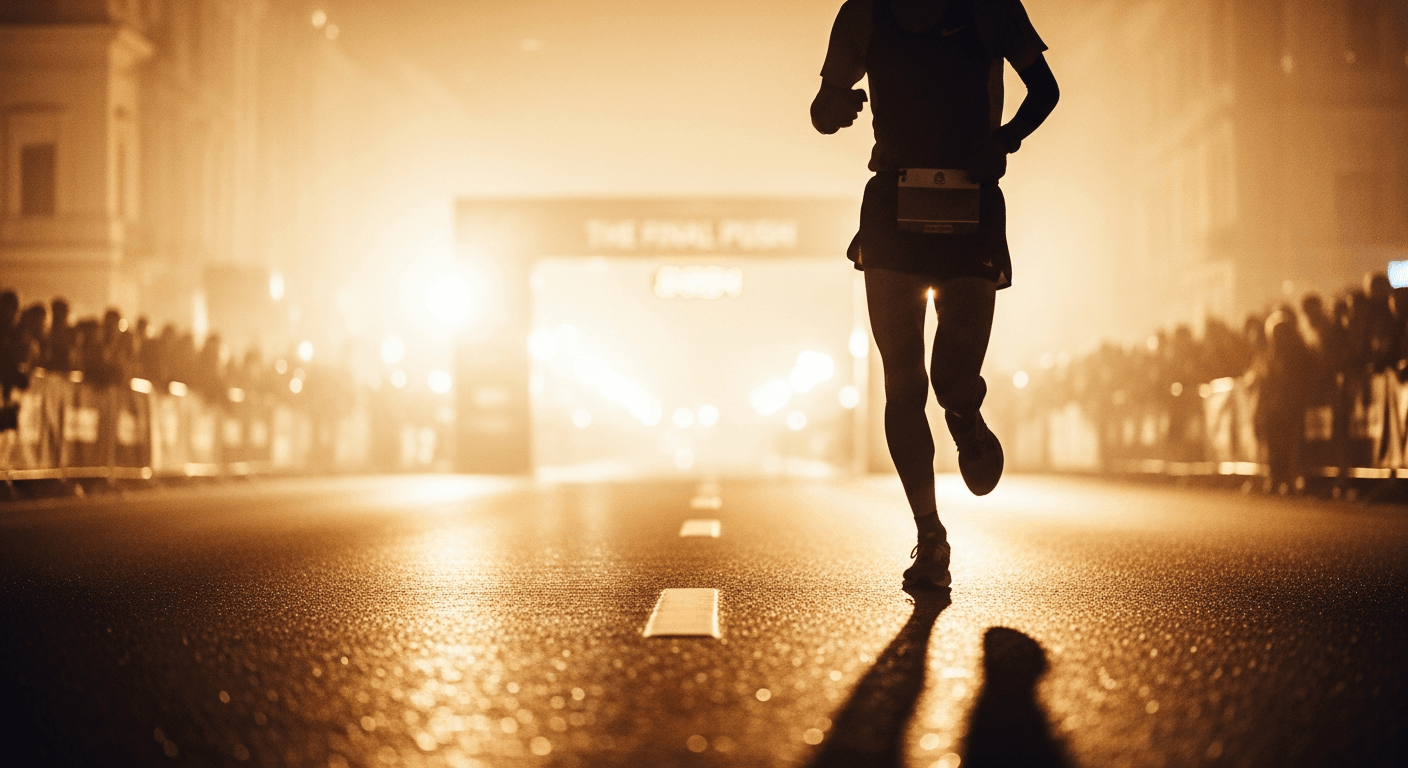
The streets of Luxembourg City went dark, the start gun fired, and Bart Janssen ran straight into history. The Dutch long-distance runner crossed the finish line first at the 2026 ING Night Marathon, adding another high-profile result to what's shaping up as a landmark year for Dutch distance running on the European stage.
Janssen's victory came in a controlled, confident performance that rewarded patience. He stayed tucked in the lead pack through the first half, made his move around kilometer 30, and had enough left to hold off a late challenge from two Kenyan runners. His finishing time was posted under the warm glow of the floodlit finish arch, in front of a crowd that doesn't thin out just because it's past midnight.
A Strong Year for Dutch Distance Running
Janssen's win isn't happening in isolation. Dutch distance running has been building momentum across multiple distances and formats in 2026, with a generation of runners competing consistently at the front of European fields. Janssen himself has shown a particular aptitude for tactical racing. night marathons suit his style: deliberate early pacing, strong mid-race positioning, and a finishing kick that tends to hold up when other runners are fading from accumulated fatigue.
This result puts him among a short list of Dutch runners who have won major branded European marathons outright in recent years. Expect his name to appear on start lists at larger fall marathons if his recovery timeline allows it.
Why Night Marathons Are Growing
The ING Night Marathon is one of Europe's most established after-dark races, but it's no longer a novelty. Night marathons have expanded across the continent over the past five years, and registration data consistently shows demand outpacing supply at events that combine late start times with urban courses.
The appeal is straightforward. Evening and nighttime starts sidestep the heat that makes spring and summer morning marathons unpredictable. Cooler air temperatures reduce the cardiovascular strain that builds in warm conditions, which matters especially in the second half of a marathon when the body is already under significant load. Research on marathon performance consistently shows that finishing times worsen as ambient temperature rises above roughly 55°F (13°C). Night races keep that variable more manageable.
There's also the atmosphere. Running through a lit city at 11 p.m. is a different experience than crossing the same streets at 7 a.m. Crowds stay later, the lighting creates visual drama along the course, and the shared absurdity of running 26.2 miles well past bedtime bonds participants in a way that morning races don't quite replicate.
If you're looking at your race calendar and wondering what's next after a standard spring marathon, a night event is worth serious consideration. The calendar is expanding, and fields haven't reached the scale of the major morning majors yet, which means easier entry and a less congested course in many cases. You might also want to check how the Ogden Marathon 2026 result shows what can happen when conditions and pacing align perfectly for a motivated runner.
The Specific Demands of Racing After Dark
Night marathons aren't simply regular marathons that start later. The shift in timing touches every part of your preparation, from what you eat during the day to how your body handles the physiological reality of performing at an hour when it's normally winding down.
Here's what you need to adjust.
Nutrition Timing Changes Completely
If a race starts at 9 p.m. or later, your usual marathon nutrition template doesn't apply. You're not eating a pre-race breakfast at 5 a.m. You're managing intake across an entire waking day before the gun goes off. That means avoiding the trap of eating too much too close to race time out of nervous habit, while also not arriving under-fueled after a day of normal activity.
A practical approach: eat a solid lunch around noon, a lighter meal around 4 or 5 p.m., and a small top-up of easily digestible carbohydrates around 7 p.m. Keep fat and fiber low in the hours before the start. Your stomach will thank you around kilometer 25.
The same principles that apply to carbohydrate management in any endurance event apply here. The timing is just shifted. If you want a detailed framework for race-day fueling, the HYROX Race-Day Carb Fueling guide breaks down the no-fluff approach to carbohydrate strategy under competition pressure.
Warm-Up Routines Need to Account for Fatigue
Your body isn't fresh at 9 p.m. the way it is at 7 a.m. You've been awake for 14 or 15 hours, you've walked around, maybe worked a full day, and the normal diurnal dip in alertness and core temperature hits in the late afternoon and early evening. By race time, you may feel more awake again as adrenaline kicks in, but your muscle tissue has been through more than it would have on a morning race day.
Keep your warm-up shorter and less intense than you might for a morning event. Focus on activation rather than elevation: glute bridges, leg swings, light strides. You want to wake the legs up, not pre-fatigue them before the gun. Save the energy. You'll need it after midnight.
Lighting Gear Is Non-Negotiable on Some Courses
Well-organized urban night marathons like the ING typically light the course adequately, but you shouldn't assume that. Check the race's specific guidance on required gear. Even on a lit course, a lightweight clip-on running light or a headlamp on low-beam adds visibility for other runners and helps you read the road surface when shadows fall awkwardly near barricades or turns.
Reflective elements on your kit matter too. At mass-participation events, safety crews need to see you. Don't treat this as a style choice. It's a practical one.
Pacing Strategy at Night Requires Extra Discipline
Nighttime racing creates a specific pacing trap. The combination of darkness, cool air, and adrenaline makes the early miles feel easier than they are. Crowds line the start, the atmosphere is electric, and you feel like you could run forever. You can't. The same physiological walls exist at kilometer 32 whether it's noon or midnight.
Go out conservative. Night race participants across multiple events have been shown to start faster relative to their finish time compared to morning marathon runners, largely because the first few kilometers genuinely feel easier in cooler conditions. Knowing that pattern exists puts you ahead of most of the field.
Use a GPS watch or pacing band and commit to your target pace regardless of how you feel in the first 10 kilometers. The investment you make in restraint early comes back with interest in the final 10 kilometers when runners who went out hard are walking. Understanding when running fitness starts to decline can also help you plan smarter across your full training block leading into race day.
Training Adjustments for Night Race Preparation
If you have a night marathon on your calendar, your preparation window should include at least a handful of long runs or key workouts done later in the day than you'd normally train. This isn't about simulating exact race conditions. It's about teaching your body that it can perform at 9 or 10 p.m., and identifying any nutrition or sleep issues that emerge when you train late.
Some runners find that training in the evening disrupts sleep. If that's true for you, you need to know it before race week. Adjust your taper timing so your last hard session is far enough out that sleep debt doesn't compound going into the race.
Recovery post-race also deserves attention. Finishing at 1 or 2 a.m. means your body will want sleep almost immediately after you cross the line. Plan for that. Have easy-to-digest recovery nutrition ready so you don't skip the post-race window out of exhaustion, and give yourself more recovery days than you would after a morning race before returning to any structured training. This applies at any fitness level. Even well-conditioned runners feel the extended recovery demand that comes with late-night racing stacked on top of a full day of being awake.
If you're already exploring other competitive formats to expand your fitness base, the Grand Canyon Rim-to-Rim challenge represents what happens when runners push their preparation to its outer edge. Night marathon training can serve as useful groundwork for events that test both physical and mental endurance in unconventional conditions.
What Janssen's Win Signals for the Sport
Bart Janssen's victory is a result worth celebrating on its own terms. But it also lands at a moment when night marathons are moving from the niche end of the race calendar toward the mainstream. More sponsors are attaching their names to late-night events. More city governments are closing streets after dark. More runners are putting these events on their bucket lists alongside established majors.
The ING Night Marathon has always had identity. Janssen's headline-grabbing win gives it wider reach. If you've been curious about what running after dark actually feels like, 2026 is a reasonable year to find out.