
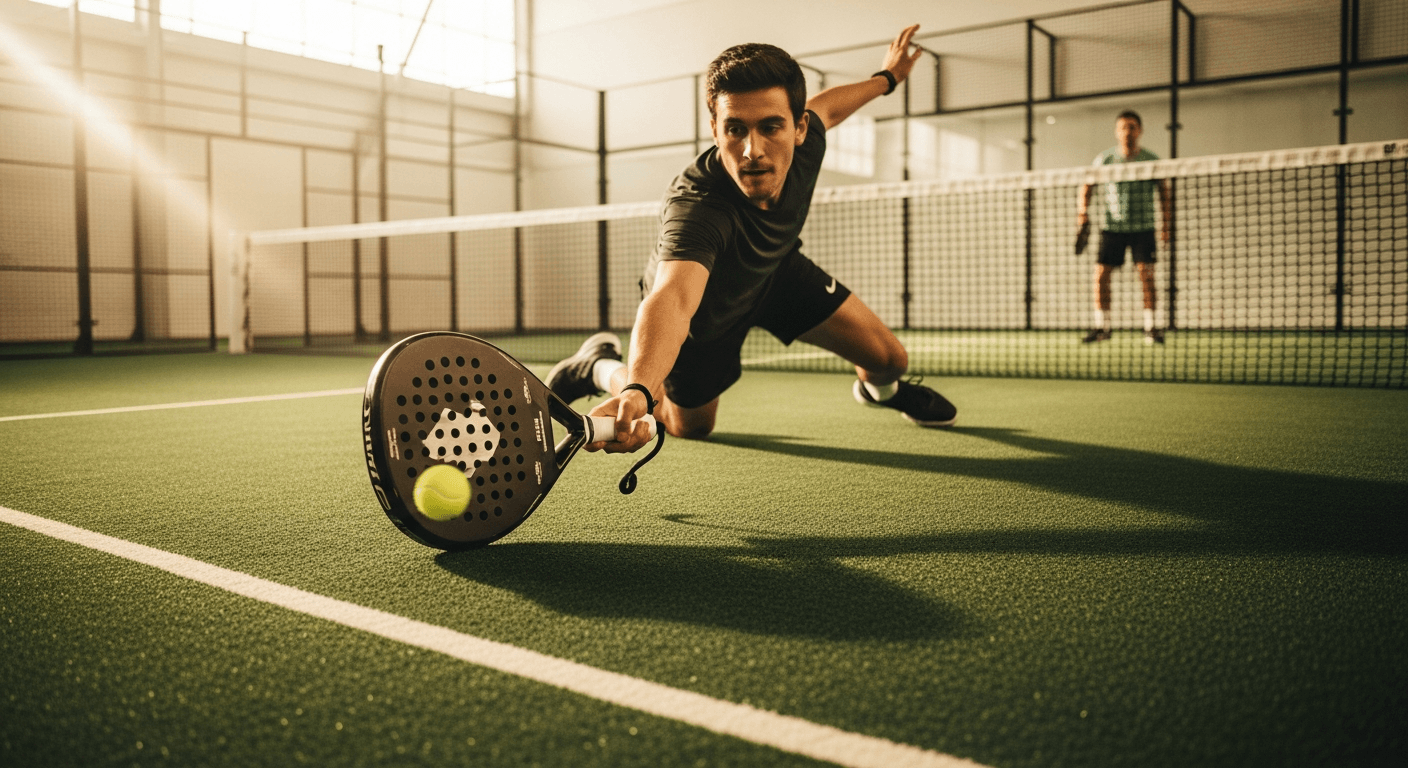
A new facility called Smash Zone opened in Le Mans, France in June 2026, dedicated exclusively to padel and pickleball. No gym floor. No group fitness studio. Just courts, booking software, and a retail corner. It's a clean concept, and it reflects a broader trend of racket-sport venues stepping into the discretionary fitness spend that traditional gyms have long owned.
But here's the more interesting question for gym operators: do you build a standalone concept, or do you integrate courts into what you already have? The unit economics are different. The member behavior is different. And the risk profile is very different.
Why Racket Sports Are Forcing the Conversation Now
Padel has moved from niche to mainstream across Europe and Latin America faster than almost any other participation sport. The global padel market was valued at approximately $1.5 billion in 2024 and is projected to grow at a compound annual rate above 15% through 2030. In markets like Spain, Sweden, and increasingly the US, the sport has gone from an afterthought to a primary driver of premium fitness real estate decisions.
Pickleball's trajectory in the US is well-documented. The Sport and Fitness Industry Association reported over 13 million players in the US as of 2024, up from 4.8 million in 2021. Court construction is accelerating, with developers, municipalities, and private operators all competing to supply a participation base that's still outpacing available infrastructure.
These aren't parallel trends. They're part of the same behavioral shift: people want fitness that feels social, skill-based, and repeatable. A format that brings you back twice a week because you've booked a match, not because you've summoned the willpower to use a treadmill.
For gym operators already watching Life Time's 2026 Wellness Survey data showing 82% of gym members prioritizing strength training, racket sports represent a complementary demand signal. The members who care most about their physical performance are also the ones most likely to add a skill sport to their weekly routine.
The Three-Part Case for Integration
The argument for adding padel or pickleball courts to an existing gym footprint rests on three interconnected factors, and you need all three to work for the model to make sense.
Predictable court rental revenue. Unlike membership, court rental is transactional. Each booking generates a fixed return, typically $25 to $45 per person per hour for padel in urban US markets, with peak-hour slots often selling out days in advance in high-demand locations. This revenue doesn't fluctuate with seasonal membership churn, doesn't require a retention program, and doesn't care whether your January sign-up cohort is still showing up in March.
The right demographic overlap. Padel in particular skews 35 to 55, higher income, social by habit, and already predisposed to premium health spending. That's the same profile driving premium gym membership growth. If you're running a facility at the $80 to $150 per month tier, you're already serving or trying to serve this cohort. Adding courts gives you a second revenue line from the same acquisition investment.
Dwell time and visit frequency. A padel or pickleball session typically runs 60 to 90 minutes, and players usually arrive early and stay after. That translates to café spend, retail purchases, recovery services, and the kind of social density that makes a facility feel alive. Visit frequency increases because the sport creates external accountability through match scheduling that a gym membership alone doesn't produce. This is directly relevant to the retention challenge. Operators who've studied churn reduction as a structural operating model rather than a reactive tactic will recognize immediately that commitment mechanisms embedded in the product are more durable than loyalty programs bolted on afterward.
The Capital Reality: What Courts Actually Cost
This is where the conversation gets grounded. A single padel court requires 200 to 250 square meters of usable floor space. Construction costs in the US currently run between $90,000 and $140,000 per court depending on specification, surface material, glass quality, and HVAC requirements for enclosed indoor builds. That's before lighting, acoustic treatment, booking system integration, and any cosmetic build-out of surrounding player areas.
At a $120,000 fully installed cost and a court generating $35 per person per hour across four players, you're looking at $140 in gross court revenue per session. Run the court at 60% occupancy across 14 bookable hours per day and you're generating roughly $1,175 per day, or approximately $428,000 annually per court at that utilization rate. After facility costs, staff, maintenance, and software, a single well-run court in a busy facility can produce a net contribution in the range of $150,000 to $200,000 per year, suggesting a payback period of roughly 12 to 18 months under favorable conditions.
The problem is occupancy. Hitting 60% average utilization requires a real demand base, effective marketing, and often a league or social program to fill non-peak hours. Off-peak court time, typically weekday mornings and early afternoons, is the margin killer if you don't have a program to fill it.
This is why the model works best for operators with one of two structural advantages: underutilized floorspace that's already costing money to heat, cool, and insure, or new builds where court space can be engineered into the footprint from day one without costly renovation. Retrofitting a functional gym floor to add courts mid-lease is usually the worst-case scenario from a capital efficiency standpoint.
The Hybrid Club Model: Where the Math Gets Better
The most instructive format to study right now is the hybrid club model emerging in Spain and parts of northern Europe, where 2 to 4 padel courts coexist inside a facility that also offers strength training, group fitness, and a full membership structure. Courts are monetized on two tracks simultaneously: members get access credits or discounted booking as part of their membership tier, while non-members book at full public rates during available slots.
This dual-track monetization compresses the payback period meaningfully. Member court access can be packaged into a premium membership tier at $120 to $160 per month, adding $20 to $40 in monthly ARPU over a standard gym membership while increasing perceived value enough to reduce cancellation likelihood. Public court rental fills the remaining inventory and generates cash from outside the membership base.
The model also creates a natural acquisition funnel. Non-members who book courts for a session are warm prospects. They're already in the building, they've already paid, and they've already experienced the facility. Converting a court player into a full member is a fundamentally easier sales conversation than converting a cold lead from a digital ad. This mirrors the upsell logic that Life Time has applied to in-club nutrition coaching, where access creates the relationship and the relationship creates the upgrade opportunity.
Operators running this model in Spain are reporting blended membership and court revenue that outperforms comparable single-format clubs by 25 to 40% on a per-square-meter basis, though those figures are operator-reported and should be treated as directional rather than audited benchmarks.
What You Need to Get Right Before You Build
The operators who are getting this wrong are treating court addition as a construction project rather than a product launch. The facility is the infrastructure. The product is the community, the programming, the league structure, and the coaching pathway that fills the courts across the full weekly schedule.
A few things that separate viable integrations from expensive mistakes:
- Demand validation before commitment. Survey your existing member base. Run pop-up events. Partner with a local padel club to host sessions before you break ground. If your current members aren't expressing interest, adding courts to acquire a new demographic is a harder and slower business than it looks.
- Programming infrastructure from day one. Courts without leagues, clinics, and beginner pathways fill only during peak hours. Off-peak utilization is the difference between a good investment and a break-even one. Build the programming budget into your pro forma before you approve the capital spend.
- Staffing model clarity. Court supervision, booking management, coaching, and member onboarding to the sport all require personnel or systems that most gym operators don't currently have. This is a solvable problem, but it's not free.
- Lease and ceiling height review. Padel courts require minimum ceiling heights of 8 to 9 meters for indoor play. Many existing gym spaces won't qualify without significant structural work, which can change the economics of a retrofit entirely.
The consolidation happening in the broader gym market, visible in moves like Fitness Ventures acquiring 22 Crunch clubs, is partly a function of operators looking for differentiation that can't be easily replicated by low-cost competitors. Court-based formats are one credible answer to that problem, because a $25-per-month gym can't absorb the capital cost of four padel courts without completely restructuring its model.
Strength training remains the anchor of most member fitness identities in 2026. Racket sports don't replace that. They extend the time members spend in your facility, increase the social fabric of your club, and create a revenue line that doesn't live and die with January enrollment cycles. That's a serious strategic argument, and it's worth running the numbers on your specific footprint before a competitor in your market does it first.