
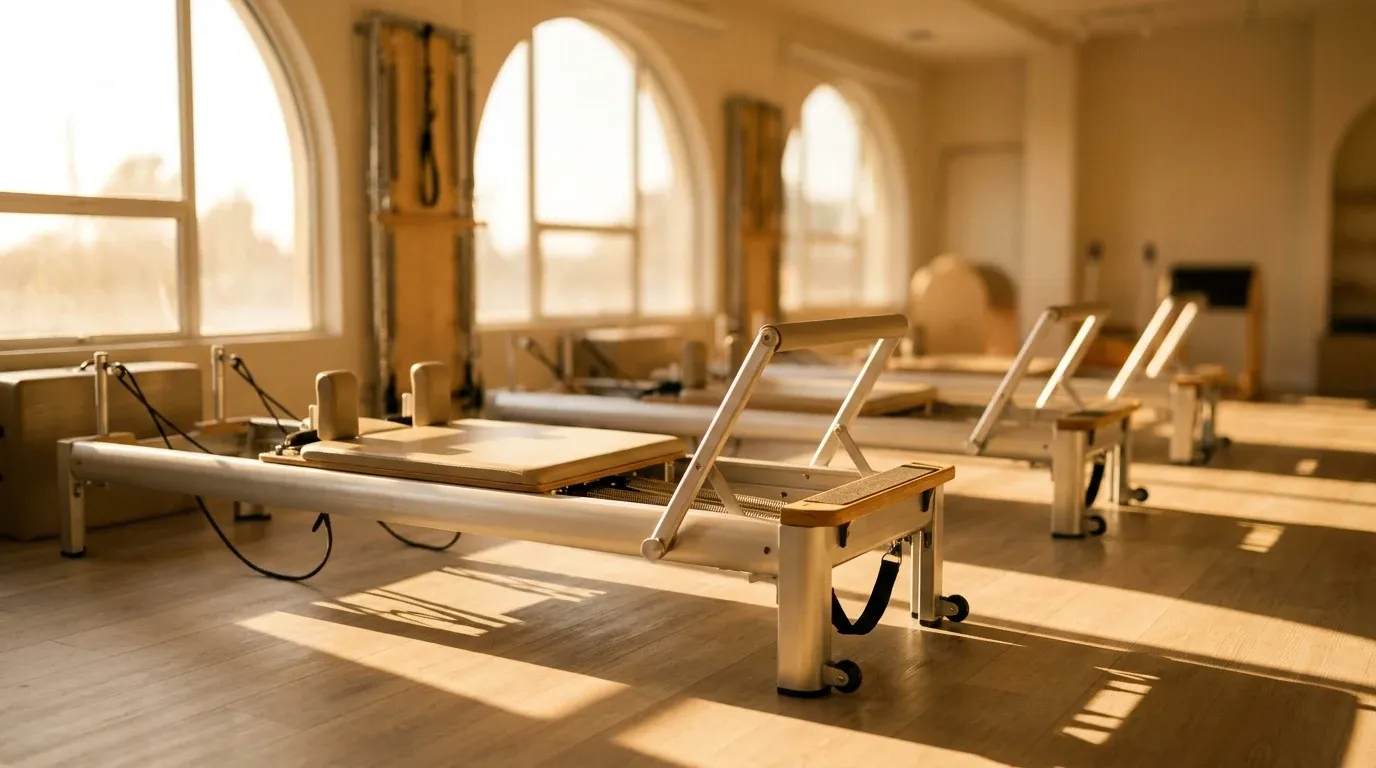
Technogym just entered the US Pilates reformer market. For an equipment manufacturer best known for cardio machines and selectorized weight stacks, that's a deliberate strategic move. And for gym operators, it raises a question that can't be ignored: is reformer Pilates now a standard commercial gym format, not just a boutique specialty?
The short answer is that it's heading there. Technogym's launch signals that institutional capital equipment is now following consumer demand into reformer-based training. If you operate a full-service gym, that changes your calculus on floor planning, programming, and revenue structure.
What Technogym Is Actually Offering
Technogym's Pilates reformer is built to commercial spec. That means durability standards, serviceability, and warranty structures that align with what gym operators already expect from treadmills and cable machines. It also means the reformer sits inside an existing procurement relationship for any operator already buying Technogym equipment.
That's not a small thing. Boutique Pilates studios have historically sourced reformers from specialist manufacturers. The equipment works, but it exists outside the service and financing ecosystems that full-service gyms rely on. Technogym's entry collapses that barrier. You can now add reformer stations to a Technogym order, finance them through the same commercial lending arrangement, and have them serviced by the same technician network.
The operational friction of introducing reformer Pilates just dropped significantly. That's the real headline, not the hardware itself.
The Timing Is Not a Coincidence
Technogym's US launch arrives in the same window that the Pilates-meets-strength-training hybrid format has been identified as one of the top emerging gym floor trends. Consumer interest in reformer Pilates has been compounding for several years, driven partly by social media visibility and partly by genuine results data on mobility, core stability, and injury prevention. Boutique studios absorbed most of that demand first.
What's shifting now is that gym members are arriving at full-service facilities already familiar with reformer work. They're not discovering Pilates in a boutique context and then joining a gym. In many cases, they're already gym members who want reformer access without paying boutique studio membership fees on top of their existing gym dues.
Equipment supply has historically lagged behind format trends. The fact that Technogym is moving now suggests internal demand data is telling them the full-service gym market is ready. For operators, that's a signal worth taking seriously, particularly as larger chains look at differentiation strategies similar to those explored in Smart Fit's 70-Gym Mexico Push: Lessons for Operators.
The Revenue Model Question
Here's where operators need to think carefully. Reformer Pilates in boutique settings commands $30 to $50 per session, typically in small groups of four to six participants. That pricing reflects instructor expertise, session structure, and the boutique experience premium. You're not replicating that inside a standard gym membership without a clear product separation.
The model that works is the add-on revenue stream. Reformer Pilates sessions become a paid programming tier that sits above the base membership. Members pay for access to small-group reformer classes the same way they might pay for personal training or specialty group fitness. This doesn't cannibalize core membership value. It extends it.
If you run four reformer stations and schedule three sessions per day at $35 per person with four participants per session, you're generating $420 per day from that reformer pod before instructor cost. At 25 operating days per month, that's $10,500 in gross monthly revenue from a relatively small floor footprint. The numbers are directionally compelling, even after accounting for instructor salaries and equipment amortization.
The key is treating reformer programming as a distinct revenue center from day one. Operators who fold it into general group fitness without a separate pricing structure will underperform on yield and struggle to justify the floor space.
Floor Space ROI Is the Deciding Variable
Reformer stations are not small. A single commercial reformer with operational clearance requires roughly 30 to 35 square feet. A four-station pod with instructor space runs close to 200 square feet. That's real estate that's currently occupied by cardio equipment or selectorized machines in most gyms, both of which serve large numbers of members with minimal staffing overhead.
The ROI comparison isn't straightforward. Cardio equipment generates no direct per-session revenue but drives membership retention and acquisition. Reformer stations generate direct per-session revenue but require dedicated programming, scheduled access, and instructor coverage. These are structurally different business units inside the same facility.
Before committing floor space, you need a realistic occupancy forecast. What percentage of your current member base has expressed interest in Pilates programming? What's your local boutique Pilates pricing benchmark? Do you have access to certified instructors, or will you need to fund certification for existing staff? These aren't obstacles. They're standard capital allocation questions that any new equipment category requires.
The instructor certification investment deserves particular attention. Comprehensive Pilates reformer certification programs typically run $2,000 to $5,000 per instructor and require significant training hours. That's a fixed cost that has to be built into your break-even calculation before you purchase a single reformer.
Who This Format Actually Serves
Reformer Pilates tends to attract members in the 30-to-55 age range, with strong representation among women, though male participation has been growing alongside the broader functional fitness trend. These are often members who already have consistent gym habits but are looking for programming that addresses mobility, recovery, and low-impact strength work alongside their existing lifting or cardio routines.
That's a high-value demographic. They tend to have longer gym tenure, lower churn rates, and higher willingness to pay for premium programming. If your facility already has strong retention in that age band, adding reformer Pilates is a retention and upsell tool as much as it's a new member acquisition play.
It's also worth noting how well reformer work complements strength-focused programming. The core stability and mobility gains from consistent reformer training directly support performance in compound lifts and reduce injury risk during high-load training blocks. For members managing the demands of structured hypertrophy training cycles, reformer sessions can serve as a genuine recovery and performance tool rather than a separate discipline.
What Operators Should Do Right Now
You don't need to rush a purchase decision. What you do need is a structured evaluation process before Technogym's launch creates competitive pressure from neighboring facilities that move faster.
- Survey your current member base. Ask directly about interest in reformer Pilates and willingness to pay a session fee above their membership. Real demand data from your specific population is more reliable than category trend reports.
- Map your floor for a pilot pod. Identify 180 to 200 square feet that could be reallocated without meaningfully degrading current member experience. Underutilized stretching areas or low-traffic cardio zones are common candidates.
- Identify your instructor pipeline. Talk to your existing group fitness staff about interest in reformer certification. Check local availability of already-certified instructors. Staffing is typically the longer lead-time item compared to equipment delivery.
- Model the revenue at two occupancy scenarios. Run the numbers at 50 percent session occupancy and 75 percent occupancy across a 90-day window. If the 50 percent scenario covers costs, the risk profile is acceptable for a pilot launch.
- Talk to your Technogym rep about financing terms. The integration into existing commercial equipment financing is one of the primary advantages of this launch. Understand whether lease or purchase structures make more sense given your current capital position.
The Broader Signal for the Industry
When a company with Technogym's market position enters a format category, it doesn't just validate the trend. It accelerates it. Other equipment manufacturers will respond. Programming certifications will proliferate. Franchise gym systems will start piloting reformer pods. The format's integration into full-service gyms will move from early adopter territory to industry standard faster than most operators expect.
This pattern has repeated across other fitness format shifts. The operators who built early competency in functional training spaces, recovery programming, and small-group coaching captured category premiums before those formats became table stakes. The same dynamic is likely here.
Understanding how to build scalable programming systems alongside equipment investment is increasingly central to operator success. The questions that apply to reformer Pilates integration, specifically around how you assess, certify, and deploy qualified instructors, are the same questions explored in what a coach's first assessment reveals about their actual competency. Getting the staffing layer right matters as much as the equipment decision.
Technogym's US Pilates reformer launch is a market maturity signal, not a novelty product announcement. The boutique Pilates model has already proven that consumers will pay a premium for reformer access. The question now is whether full-service gym operators will build the programming infrastructure to capture that demand on their own terms, or watch it continue to flow to standalone studios.
You have the equipment option now. The rest is execution. And as investment activity across the fitness technology sector continues to demonstrate, consumer willingness to pay for premium wellness experiences inside institutional gym settings is not slowing down.