
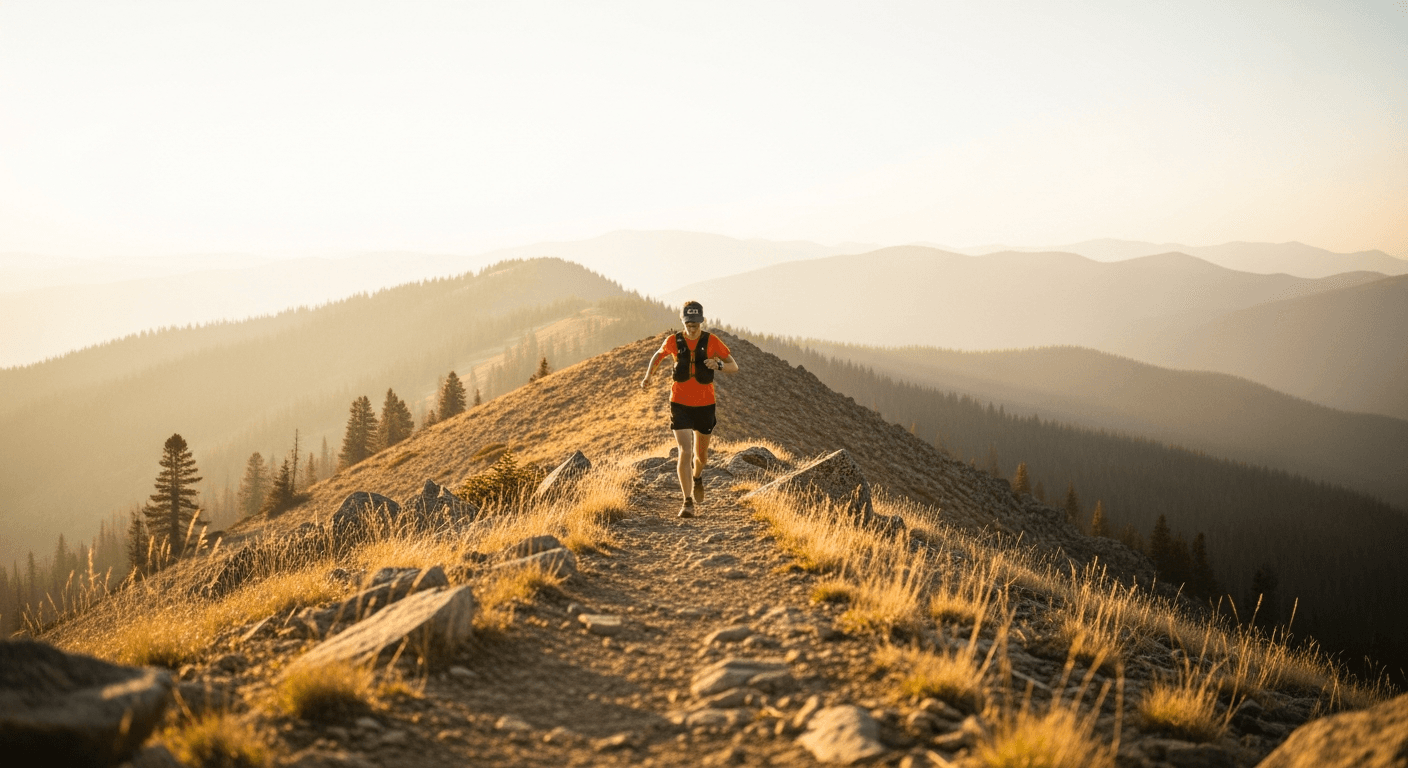
The weekend of May 25 delivered one of the most loaded trail and ultra calendars of the early summer, with races spanning the Pacific Northwest, the Northeast, and the mountains of southern France. Whether you were chasing 50k PR pace or watching split trackers from your couch, there was no shortage of performances worth talking about.
Here's a breakdown of what happened, where, and why it matters heading into the heart of the 2026 trail season.
Sugar Badger 50-50: Technical Terrain, Honest Efforts
The Sugar Badger 50-50 in Washington State once again lived up to its reputation as one of the region's most unforgiving early-summer tests. With roughly 10,000 feet of gain in the 50-mile option and a course that punishes anyone who goes out too fast, this race tends to separate well-prepared athletes from those who relied on fitness alone.
Conditions this year were mixed. Overnight rain left sections of the ridge trail soft and slick, which pushed finishing times back across the board. Still, the top finishers in both the 50-mile and 50k distances ran controlled, intelligent races. Front-runners in the open women's 50-mile field demonstrated strong technical descending, the kind of skill that doesn't show up on a training log but wins races on terrain like this.
If you're targeting a Pacific Northwest 50-miler later this summer, the Sugar Badger course is worth studying. The pacing patterns from the top ten tell you a lot about how to handle long climbs without blowing up your quads before the final descent. For a broader guide on building toward a race like this without overreaching, How to Prep for a Summer Trail Race Without Burning Out covers the key principles well.
Leavenworth Trail Fest: A Festival Format That Delivers Racing
Leavenworth, Washington, hosted its Trail Fest weekend with multiple distances on offer, drawing a mix of competitive runners and first-time trail racers into the Bavarian-themed mountain town that doubles as genuinely excellent trail running terrain.
The half marathon and 25k options saw strong regional talent show up, with several finishers using the race as a tune-up ahead of summer ultras. The festival format, with music, vendors, and post-race community events, keeps this one accessible without softening the racing. The climbs are real, and the single-track sections demand focus.
What stands out about Leavenworth from a competitive standpoint is the elevation profile relative to distance. You're doing meaningful vert in a condensed footprint, which makes it a smart training race for athletes eyeing bigger mountains in July and August.
May Madness 50k: Flat, Fast, and Genuinely Competitive
Not every trail race rewards technical mountain experience. The May Madness 50k offered a different kind of test: flat to rolling terrain that puts a premium on sustained pace rather than technical skill. For runners with a road marathon background who are transitioning into ultras, this format is an honest benchmark.
Results from the top of the field this year reflected the competitive depth growing in the 50k distance nationally. Several finishers broke personal bests despite warm afternoon conditions. The race also saw a strong showing in the masters categories, which tracks with broader participation trends across the ultra scene.
Fueling strategy is often where flat ultras get decided. Athletes who dialed in their nutrition in the back half of the race consistently outperformed those who faded. If you're still working out race-day fueling, the principles in Cycling Event Nutrition: Your Race-Day Fueling Guide translate directly to running distances at this range, particularly around carbohydrate timing and sodium intake.
Pineland Farms Trail Festival: A Northeast Institution
The Pineland Farms Trail Festival in New Gloucester, Maine, has established itself as one of the most beloved events on the Northeast trail calendar, and the 2026 edition delivered again. Set on the rolling farmland and wooded trails of the Pineland Farms property, the festival hosts distances from 5k through 50 miles over the course of the weekend.
The 25k and 50k races drew competitive fields, with the women's 50k results particularly worth noting. The course rewards consistent effort over terrain that looks manageable on paper but accumulates fatigue across the back half. Several athletes who were strong at Pineland last year used the result as a springboard to bigger performances later in the summer season.
The festival atmosphere also makes Pineland a smart entry point for newer trail runners. If you're coming from roads and want to understand what pacing by effort actually means on variable terrain, events like this are where that education happens fastest. It's the kind of experience that makes the argument for running by feel rather than GPS feel concrete rather than theoretical.
Drummer Hill Trail Races: Regional Racing at Its Best
The Drummer Hill Trail Races in Connecticut added another point on the domestic calendar, offering shorter distances that serve the growing community of trail runners who aren't yet ready for 50k but are serious about racing off-road. Events like Drummer Hill matter for the ecosystem of the sport. They create the pipeline of athletes who eventually show up at ultras.
Results were competitive across age groups, and the shorter format brought out runners who typically race roads. The crossover between road and trail continues to accelerate, and regional events with accessible distances are a big part of why.
Skyrace Gorges Du Tarn: European Mountain Racing Worth Watching
Across the Atlantic, the Skyrace Gorges Du Tarn in southern France brought skyrunning back into the spotlight. Skyrace events sit in their own category. Short, steep, and technical, they bear more resemblance to alpine climbing with a race bib than they do to traditional trail running. The Gorges Du Tarn course runs along dramatic limestone canyon walls, with exposure and scrambling sections that filter the field quickly.
This year's results carry weight beyond the local podium. Skyrunning series standings are accumulating toward the second half of the 2026 calendar, and performances at events like Gorges Du Tarn will factor into selection conversations for international squads. Athletes who showed well here are ones to track through the summer.
The European skyrunning scene has been gaining serious momentum in 2026. If you want broader context on where the elite mountain racing landscape stands right now, the recent breakdown of Zegama 2026 and Tove Alexandersson's performance offers useful framing for how the top of the field is taking shape this season.
What the Gorges Du Tarn result also signals is the continued globalization of mountain racing. North American athletes are increasingly showing up at European skyrunning events, and European runners are appearing on US ultra start lists. The calendar is becoming genuinely international in a way that reshapes how you think about training cycles and peak timing.
What's Next: BolderBoulder 10k on the Horizon
While the trail scene dominated this weekend, the road calendar doesn't pause. The BolderBoulder 10k in Boulder, Colorado, is one of the most iconic Memorial Day weekend road races in the country, drawing tens of thousands of participants across citizen waves and an elite international field. It's a genuine spectacle that sits outside the trail and ultra world but deserves mention for road runners staying engaged alongside the off-road surge.
The BolderBoulder has a habit of producing fast times at altitude, and the elite field typically reflects the current state of American distance running. Keep an eye on the 10k results as a snapshot of where road speed sits heading into summer track season.
The Bigger Picture for the 2026 Trail Season
What this weekend illustrated is the breadth of the trail and ultra landscape in 2026. You have mountain skyrunning in Europe, technical Pacific Northwest 50-milers, accessible festival formats in New England, and flat ultra benchmarks, all running simultaneously. The sport has expanded in every direction.
Participation data continues to trend upward across ultra distances in North America, with the 50k remaining the fastest-growing segment. First-time ultra finishers make up a significant portion of race fields at events like Pineland and May Madness, which reflects both the accessibility improvements in entry-level trail racing and the quality of training resources now available to athletes at every level.
Recovery and nutrition habits are also evolving alongside participation numbers. As athletes take training more seriously, questions around what actually works, from fueling strategies to supplement choices, get sharper. Research flagged in Ultra-Processed Foods: What Practitioners Say in 2026 is increasingly relevant for endurance athletes trying to optimize what they eat without overcomplicating it.
The trail and ultra scene has two or three more packed weekends before the heat of midsummer shifts the calendar toward mountain-focused events and hundred-mile races. If you're racing in that window, the performances from this weekend's fields are the benchmarks you're measuring yourself against.