
There are hard races, and then there's Pikes Peak. Every August, thousands of runners line up in Manitou Springs, Colorado, to take on one of the most physically demanding events in North American running. The Pikes Peak Ascent covers 13.3 miles from the town's historic starting line to a summit sitting at 14,115 feet above sea level. The Marathon adds a return descent for a brutal 26.2-mile round trip. Neither route forgives poor preparation.
What makes Pikes Peak different from a standard trail race isn't just the distance or the elevation gain of roughly 7,815 feet on the Ascent. It's the combination of thin air, unpredictable alpine weather, and terrain that shifts from wooded switchbacks to exposed rocky ridgelines near the top. Finishing here means something. So does understanding what it actually takes to get there.
The Course: More Than a Long Hike
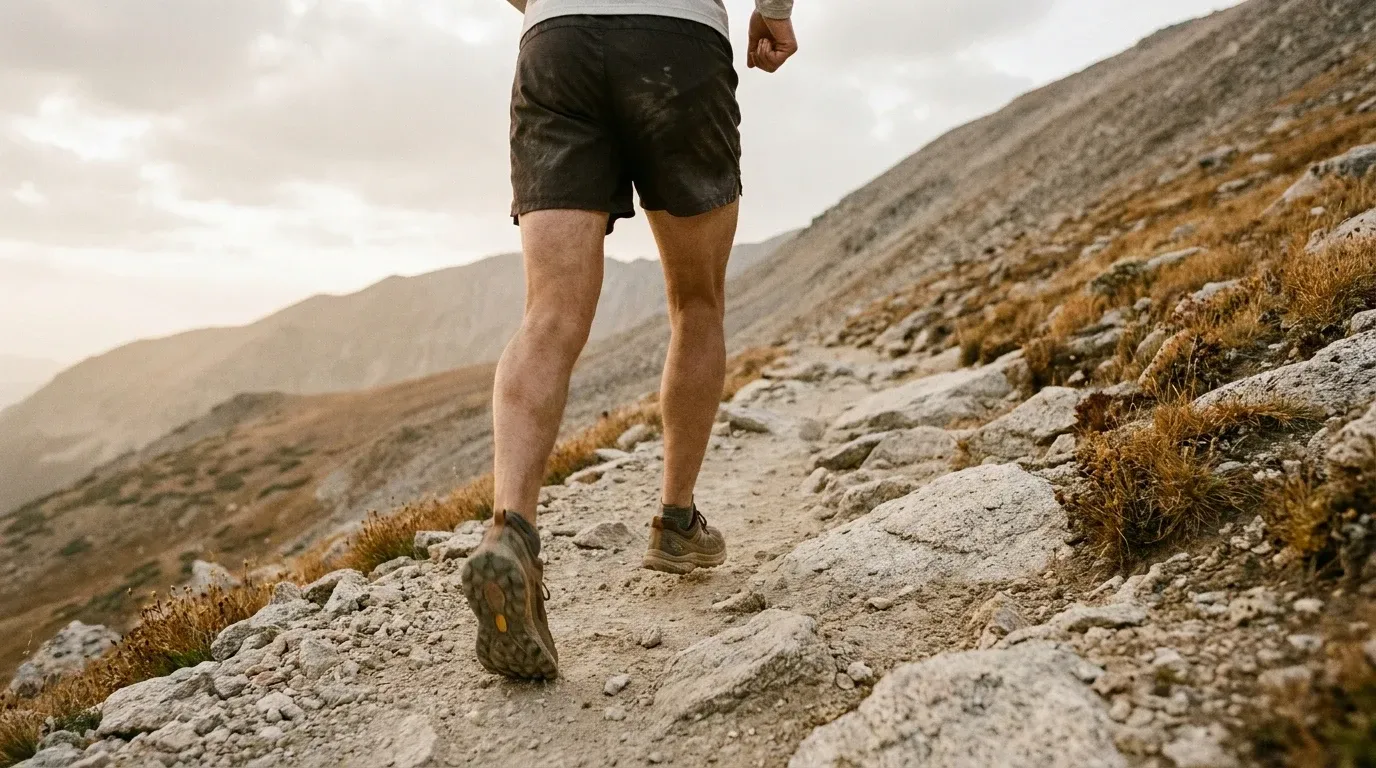
The Barr Trail, which serves as the race route, climbs steadily from around 6,300 feet at the start through dense pine forest, past the Barr Camp shelter at roughly mile eight, and then above treeline into a world that looks nothing like the Colorado Front Range below. The final three miles are relentless. The trail becomes rocky, technical, and exposed to whatever the weather decides to bring that morning.
Above 12,000 feet, the atmosphere holds significantly less oxygen than at sea level. Runners who have trained exclusively at low altitude often underestimate what that means for pace, breathing, and recovery. A heart rate that feels manageable on flat roads at sea level can spike dramatically on the upper sections of Barr Trail, even at what feels like an easy effort.
Weather compounds everything. Pikes Peak is notorious for fast-moving afternoon thunderstorms, and race officials have been known to hold runners at Barr Camp or redirect them off the summit due to lightning risk. Starting early is by design, but conditions can still change within a single hour at altitude. Experienced mountain runners treat weather preparedness as non-negotiable, not optional.
Altitude Physiology: The Science Behind the Struggle
Understanding what altitude does to your body is the first step toward racing it well. At 14,115 feet, the partial pressure of oxygen is roughly 60 percent of what it is at sea level. Your blood carries less oxygen per breath, your muscles fatigue faster, and your brain can become less sharp. Acute mountain sickness affects a meaningful portion of runners who haven't acclimatized, producing symptoms that range from headache and nausea to severe dizziness.
The standard recommendation from sports medicine research is to arrive at altitude at least two to three days before competition, or ideally a week or more. Some runners opt to arrive the day before and race before significant altitude effects set in. Both strategies have merit. What doesn't work is arriving two or three days out without additional acclimatization time, which often lands runners in the worst window for symptoms.
Hydration becomes more critical at altitude, where respiratory water loss accelerates and dehydration symptoms can mimic or worsen altitude sickness. Electrolyte intake matters too. If you're the type who pushes hard on race day, you'll lose sodium faster than you expect. Planning your fluid and electrolyte strategy before you reach Barr Camp is far smarter than trying to fix a problem above 12,000 feet.
Pacing Strategy: Starting Slower Than You Think You Should
Ask any Pikes Peak veteran what mistake they see most often in first-timers, and the answer is nearly universal: going out too fast. The start in Manitou Springs feels manageable. The legs are fresh, the crowd energy is high, and the early miles through town aren't technically demanding. Runners who bank on that feeling and push hard in the first four miles tend to pay for it significantly above Barr Camp.
A smarter approach treats the race in distinct segments. The lower wooded section below Barr Camp rewards patience. Moving conservatively here preserves glycogen and limits early cardiovascular stress. From Barr Camp to treeline, you're asking your body to work at increasingly thin air. Above treeline, the goal shifts from maintaining pace to maintaining forward momentum, which is a meaningful distinction when every step upward costs more than the one before.
Power hiking is not a compromise at Pikes Peak. It's a legitimate race strategy used by elite and age-group runners alike. Research on mountain ultramarathons consistently shows that runners who transition to hiking steep grades earlier preserve more energy for the sections where running is genuinely more efficient. You're not losing time by hiking the steep pitches. You're protecting the finish.
This principle connects to a broader truth about training volume and specificity. The same logic that applies in other endurance disciplines applies here: more effort doesn't automatically produce better outcomes if it's effort applied at the wrong time. As explored in the research on diminishing returns in training volume, pushing harder than your recovery allows rarely leads to the performance gains athletes expect.
Gear Selection: What to Carry and Why It Matters
Pikes Peak Ascent runners are required to carry certain mandatory gear, and race organizers are clear about enforcing those standards. Beyond what's required, there's a practical gear philosophy that separates those who finish comfortably from those who suffer unnecessarily.
The essentials for any runner attempting this race include:
- Layering system: A wind-resistant or waterproof shell is non-negotiable above treeline. Temperatures at the summit can drop 30 degrees Fahrenheit below what you experienced at the start line, even in August.
- Gloves and hat: Lightweight options that pack easily. Altitude wind chill can be severe, and cold hands affect your ability to manage gear, food, and your own safety.
- Trekking poles: Optional for the Ascent, but used by a significant portion of the field. On the Marathon's descent, poles reduce quad loading substantially. If you plan to use them, train with them beforehand. Race day is not the time to figure out pole technique.
- Nutrition and hydration: The race has aid stations, but you should not rely on them as your only nutrition plan. Carry enough calories to sustain your effort between aid points, and test your race-day nutrition during training runs at similar intensity.
- Footwear: Trail shoes with solid grip are essential. The upper sections of Barr Trail involve loose rock, and footwear without adequate traction becomes a liability when your legs are fatigued.
Don't cut gear corners to save weight if you haven't tested a leaner setup in real alpine conditions. A few ounces of a shell jacket is meaningless compared to the cost of hypothermia-related deterioration at 13,000 feet.
The Mental Demands of Racing at Elevation
The physical challenge of Pikes Peak is visible and measurable. The mental challenge is harder to quantify but equally important. Racing above treeline on tired legs with altitude narrowing your cognitive bandwidth is a specific kind of pressure that standard road race preparation doesn't fully address.
Runners who perform well at Pikes Peak describe a common mental approach: accepting discomfort without catastrophizing it. The final three miles will be hard. That's not a sign that something has gone wrong. It's the race working as designed. Having a mental framework for that difficulty before you arrive at the starting line is part of preparation, not just a psychological nicety.
Developing that kind of mental resilience is a trainable skill. Structured mental preparation for high-stakes races covers techniques that translate directly to events like Pikes Peak, where the conditions are unpredictable and the effort demands are sustained over hours rather than minutes.
It also helps to know why you're there. Pikes Peak draws runners across the full spectrum of ability and experience, from elite mountain specialists to people running their first trail race of any significant length. That breadth is part of what makes the event meaningful. Trail and mountain running participation continues to grow globally, and Pikes Peak sits at the center of that conversation for North American runners.
Training for the Race: Building the Right Foundation
If you're targeting the Pikes Peak Ascent, your training needs to reflect the specific demands of the course, not just general trail running fitness. Vertical gain, altitude stress, and prolonged time on feet are the three variables to build around. Weekly vert should be a priority metric alongside mileage. Running the same flat trails at higher volume won't prepare your legs for 7,815 feet of sustained climbing.
Strength training supports this goal meaningfully. Single-leg work, hip hinge patterns, and loaded step-up variations build the muscular endurance that climbing demands. The research on optimal strength training doses for endurance athletes is useful here: two targeted sessions per week tends to add more than it costs in recovery, while more frequent sessions may interfere with the running volume you need.
If you don't live at altitude, consider a pre-race trip to Colorado for a long weekend of hiking or easy running at elevation four to six weeks before the race. It won't fully acclimatize you, but it provides valuable data on how your body responds and gives you a more realistic expectation for race day.
Nutrition preparation is often underestimated. Race week nutrition matters as much at Pikes Peak as any other major event, and getting carbohydrate loading and pre-race hydration right can meaningfully affect your performance in the upper miles when fuel depletion accelerates at altitude.
Why Pikes Peak Belongs on Your Running Radar
Pikes Peak isn't just a race for specialists. It's a race that rewards preparation, patience, and a genuine respect for mountain conditions. The runners who finish strong aren't necessarily the fastest road runners or the most experienced trail athletes. They're the ones who understood what they were signing up for, trained specifically for it, and managed their effort across 13.3 miles of terrain that asks something different from every section.
The summit is achievable. The experience is unlike anything else in North American running. And the lessons it teaches about pacing, adaptability, and knowing your own limits tend to carry forward into every race you run afterward.