
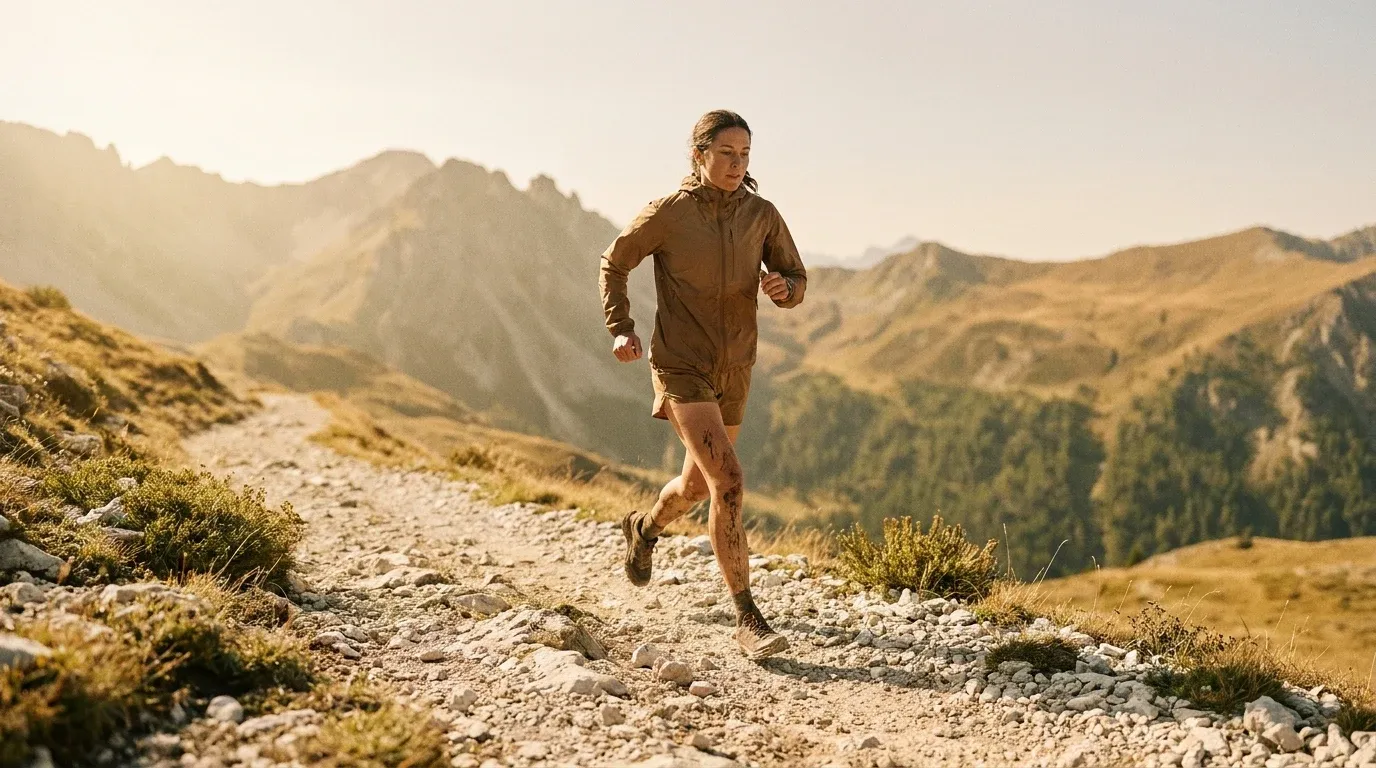
French trail runner Maud Combarieu crossed the finish line first at the 2026 Marathon de Canfranc, claiming an outright women's victory on one of the most demanding courses in the Pyrenean race calendar. The result wasn't just a personal milestone. It was a statement about where French female trail running is headed.
Canfranc is the kind of race that filters out ambition fast. If your training hasn't been honest, the mountain will find out. Combarieu's win, earned on technical terrain at altitude, signals that she's built something real this season.
What the Canfranc Course Actually Demands
The Marathon de Canfranc runs through the Spanish Pyrenees, threading through valleys and ridge lines above the historic Canfranc International railway station in Aragon. The course is not a road marathon with a trail label. It's a legitimate mountain race, featuring extreme cumulative elevation gain, exposed rocky sections, and altitude variations that punish runners who haven't trained specifically for vertical stress.
Total elevation gain across the route sits in the range that separates trail runners from mountain runners. Competitors face sustained climbs where forward momentum slows to a hike, followed by technical descents that demand full concentration and precise footwork. Mistakes on the downhills cost time and, in some cases, far more than that.
The race draws a competitive international field each year, but local knowledge and altitude-specific conditioning consistently shape the results. Combarieu, who trains across French and Spanish mountain terrain, has developed the vertical capacity this course requires.
If you're thinking about targeting a similar race this fall, building your training week around elevation-specific work is non-negotiable. The guide on how to structure your fall race season training week breaks down exactly how to phase that kind of preparation.
How Combarieu Ran Her Race
Combarieu moved conservatively through the opening climbs, letting the course sort the field rather than forcing the pace herself. That restraint on the ascent is a tactical choice that many runners get wrong. The temptation to push hard early on a mountain race, especially when adrenaline and competition are present, tends to collapse athletes on the back half.
She came into her own on the mid-race technical sections, where efficiency of movement matters as much as raw fitness. Trail running at this level rewards athletes who've logged enough technical miles to run descents without braking constantly. By the final climb, Combarieu had built a gap that she managed cleanly to the finish.
Her pacing discipline reflects a broader truth about elite trail performance: the athletes who win these races rarely look like they're racing in the first half. They look like they're managing. The racing happens later, when fatigue has made everyone else's decisions worse.
Nutrition and Fueling at Altitude
Performing over a multi-hour mountain effort at altitude places specific demands on carbohydrate availability. Research consistently shows that endurance athletes underperform when glycogen stores are compromised during sustained climbs. The physiological cost of ascending at altitude is significantly higher than flat-ground running at equivalent pace, which means fueling strategies designed for road events don't translate directly.
Timing carbohydrate intake relative to effort intensity is a detail that separates athletes who finish strong from those who survive the back half. The science behind carb timing for fall endurance training is increasingly clear: it's not just about total intake, it's about when glucose availability peaks relative to your hardest efforts.
For a race like Canfranc, that means front-loading fuel before the major climbs rather than chasing energy deficit once it's already affecting your movement quality.
A Strong Year for French Female Trail Runners
Combarieu's win doesn't exist in isolation. The 2026 season has seen French women consistently performing at the front of international trail and mountain running fields. Across major European mountain races and ultra events, French female athletes have placed repeatedly in the top positions, drawing attention from coaches and race directors globally.
This isn't accidental. French mountain running culture has long emphasized technical terrain development from a young age, with club structures that prioritize altitude training and cross-country skiing transitions that build aerobic capacity in ways that transfer directly to trail performance. That pipeline is producing results at the elite level right now.
What's also notable is the consistency. It's not one athlete carrying the flag. It's a cluster of women in their mid-to-late twenties and early thirties who've reached competitive maturity at roughly the same moment. Combarieu fits that profile. Her progression over the past three seasons has been measured and deliberate, which suggests there's more to come rather than a single peak result.
What This Result Means for the Fall Season
A Canfranc win in the summer positions Combarieu well heading into the fall ultra calendar. The timing matters. Races like UTMB and its affiliated events, along with other major autumn mountain ultras, represent the season's highest-profile opportunities. An athlete who wins a technically demanding race in July or August and recovers well has a legitimate shot at carrying that form into October.
The question for Combarieu, as it is for any athlete coming off a hard mountain race, is how she manages the recovery and training load between now and her next target. Pushing too hard after a demanding effort risks accumulative fatigue that blunts performance at the moments that matter most.
If you're building toward a fall trail race yourself, the decision of which event to target is worth thinking through carefully. Matching the race to your current ability and training trajectory makes a real difference in how the day unfolds. The breakdown on how to pick the right trail race this fall is worth working through before you commit to a registration.
The Physical Cost of Winning at This Level
Elite trail racing at altitude is physiologically expensive in ways that don't always show up immediately. Iron depletion is one of the less visible risks for female endurance athletes competing at this frequency and intensity. Research shows that female runners are significantly more vulnerable to iron deficiency than their male counterparts, and that the warning signs are often subtle until performance has already been affected.
Fatigue that feels like overtraining, paces that won't respond to effort, and recovery that stalls without clear cause are all signals worth investigating with a blood panel rather than dismissing as normal training load. The detailed breakdown of iron deficiency warning signs for runners covers what to look for and how to test proactively rather than reactively.
For athletes competing across multiple mountain races in a single season, monitoring iron status isn't optional. It's part of the performance infrastructure.
What Runners Can Take From Combarieu's Approach
You don't need to be competing at Combarieu's level to apply what her racing reflects. The principles that enabled her Canfranc win are accessible at every level of the sport.
- Train specifically for your terrain. General fitness doesn't transfer cleanly to technical mountain running. If your target race involves significant elevation, your training needs to include significant elevation.
- Manage early effort ruthlessly. The runners who blow up on mountain courses almost always went too hard in the first third. Patience early creates options late.
- Fuel for the effort ahead, not the effort behind. Don't wait to feel depleted before you eat. Pre-climb fueling is a skill that needs to be practiced in training.
- Take technical descents seriously. Most amateur trail runners train climbs and neglect downhill technique. The fastest descenders in the field aren't the bravest. They're the most practiced.
- Monitor your physiology across a long season. Winning races has a cost. Recovery, nutrition, and blood work matter as much as the training itself.
Combarieu's win at Canfranc is a result worth paying attention to. It's a marker of a runner who's developed the full package for mountain racing: technical skill, pacing intelligence, altitude capacity, and competitive maturity. The fall season will tell us how high her ceiling actually is.