
What a new Japanese study found
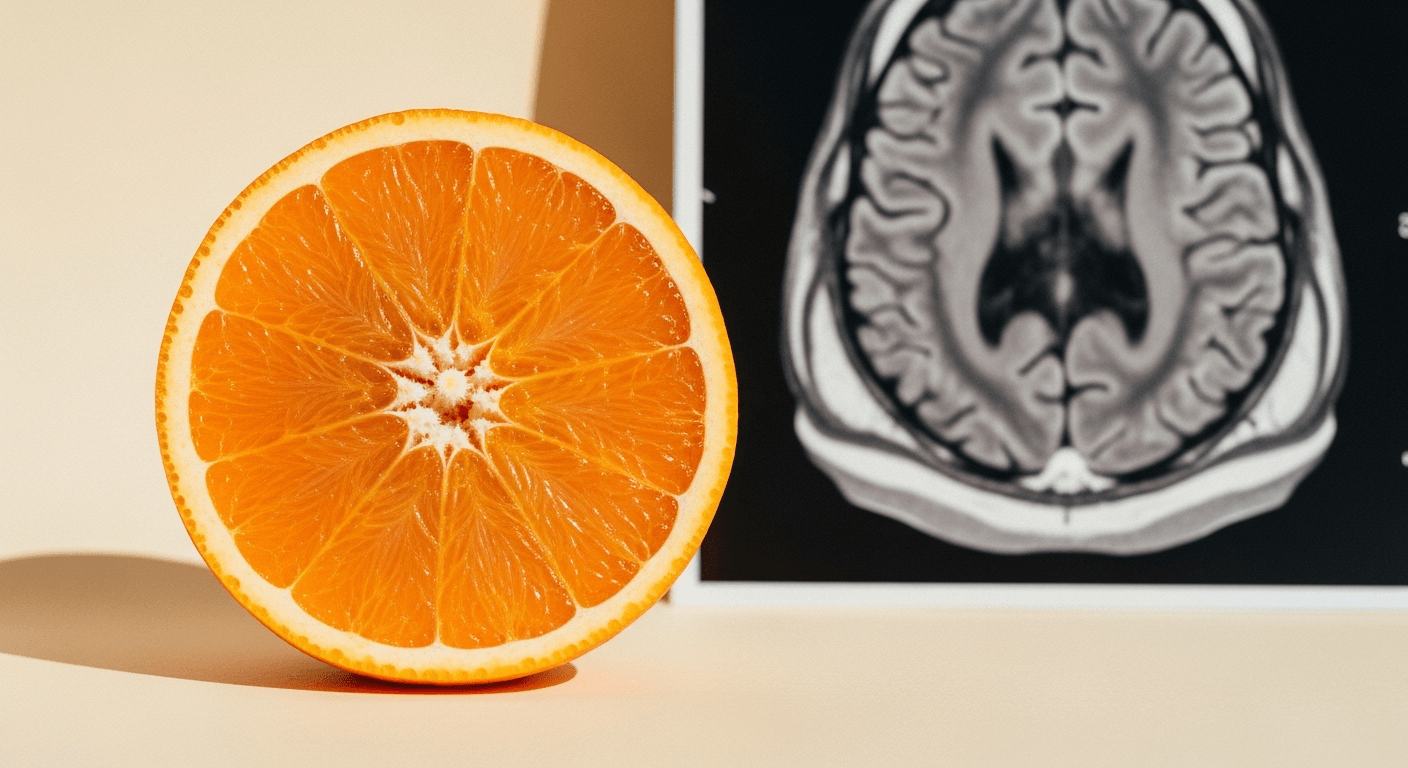
A study published June 10, 2026 in PLOS One, conducted by researchers at Hirosaki University in Japan on 2,044 older adults, adds new evidence on vitamin C's role in brain health. The main finding: participants with lower blood vitamin C levels had significantly less gray matter volume in brain regions linked to memory and cognition — particularly in the default mode network, which plays a central role in memory consolidation and cognitive processing.
The default mode network: why it matters
The default mode network is active when the brain isn't focused on an external task — during introspective thought, planning, and memory recall. It's one of the most studied networks in cognitive neuroscience, and its integrity is associated with better memory performance and reduced risk of cognitive decline. Finding this network associated with vitamin C levels adds to a growing body of evidence on antioxidants and long-term brain health.
What this doesn't prove — and what it suggests
An observational study doesn't prove causation. People with higher dietary vitamin C may also have a generally healthier lifestyle, which could partly explain the brain differences observed. What the study does suggest: maintaining optimal vitamin C levels is part of a nutritional pattern that, over time, may protect brain health. This is consistent with existing data on antioxidants and neuronal oxidative stress.
Vitamin C requirements and how to hit them
The recommended daily intake is 75-90mg for adults (110mg for smokers, who have elevated requirements). Many adults — especially those with low fruit and vegetable consumption — don't consistently hit this target.
Best food sources:
- Raw red bell pepper: 190mg per 100g
- Kiwi: 93mg per 100g
- Strawberries: 59mg per 100g
- Orange: 53mg per 100g
- Cooked broccoli: 65mg per 100g
Supplementation (vitamin C tablets) works for those who struggle to hit targets through food alone. But the whole-food-first approach is preferable — produce rich in vitamin C also provides flavonoids and other antioxidants that work synergistically.
Implications for athletes
Athletes have slightly elevated vitamin C needs due to oxidative stress from intense exercise. The research here is nuanced — excess antioxidant supplementation can interfere with training adaptations — but maintaining adequate levels through diet remains a priority. For most people, five portions of fruit and vegetables per day covers requirements comfortably.