
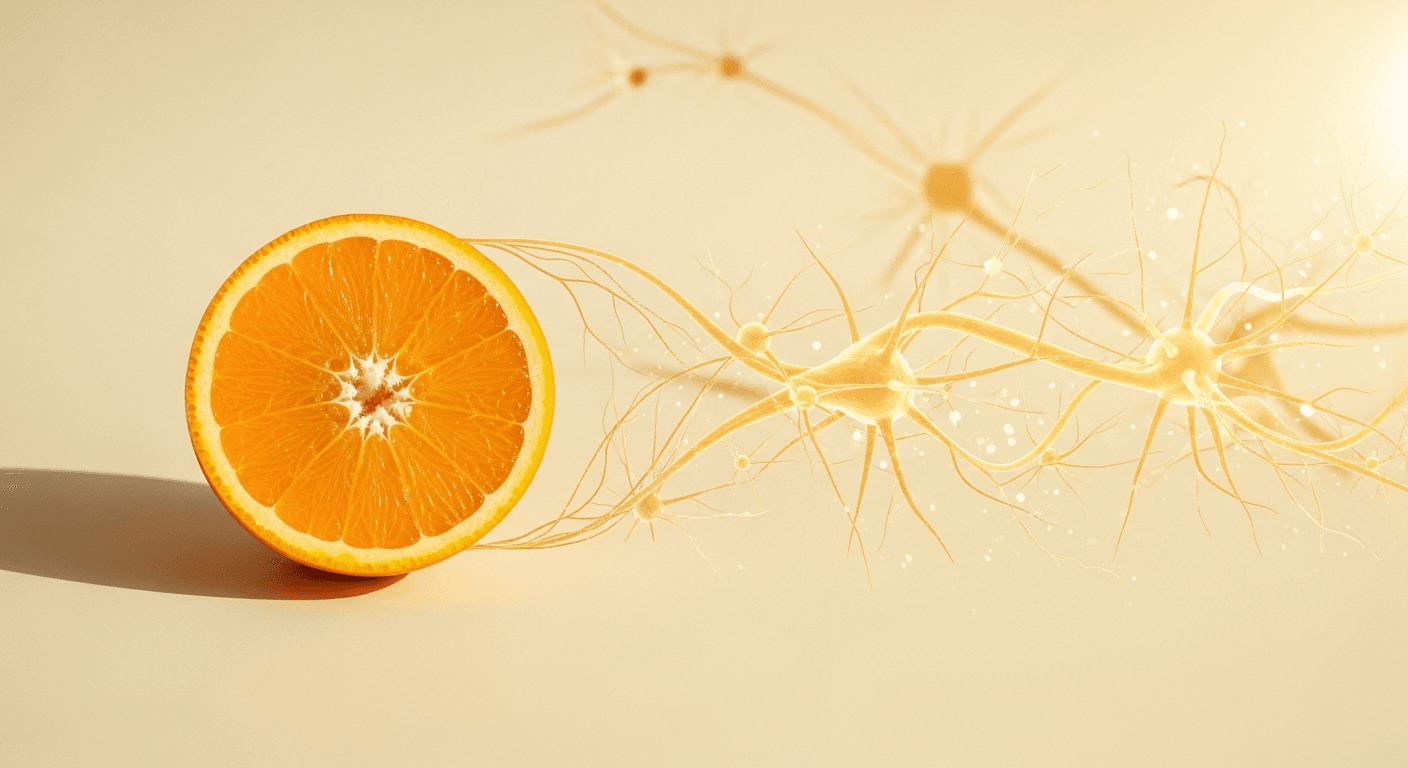
Vitamin C is best known for its immune function. But a study published in early July 2026 adds an unexpected dimension: people with optimal blood vitamin C levels have, on average, larger gray matter brain volume than those who are deficient. A finding worth examining carefully — with the caution that association studies require.
Key Takeaways
- Study finds an association between optimal vitamin C status and higher gray matter volume
- Gray matter is involved in information processing, memory, and executive function
- This is an association study — it shows a link, not proven causation
- Vitamin C deficiency is more common than assumed, particularly in smokers, older adults, and low fruit/vegetable consumers
- Recommended daily intake: 65-90 mg/day (US) — one orange and half a red pepper covers it
50 µmol/L) and gray matter volume. Study published July 2026 -->
What the study found
The study analyzed data from a large adult sample, cross-referencing blood vitamin C levels (measured as plasma ascorbate) with brain MRI data measuring volumes of different brain structures.
The main finding: participants with vitamin C status in optimal ranges showed, on average, higher gray matter volume than those who were deficient or insufficient — particularly in regions associated with memory and executive function.
Importantly: this effect is observable after adjusting for other confounding variables including age, sex, BMI, and physical activity level. That suggests the link isn't entirely explained by the fact that people with better vitamin C status tend to have generally healthier lifestyles.
What the study doesn't prove
Worth being clear about: this is an association study, not a randomized controlled trial. We can't conclude that taking vitamin C increases gray matter volume. We observe that people with higher levels tend to have more of it — but causation isn't established.
Several alternative explanations are possible: people who eat lots of fruits and vegetables (and therefore have good vitamin C status) also have other brain-protective habits. Chronic inflammation — often higher in deficient individuals — could be the actual mediator rather than vitamin C itself.
The next logical scientific step is a randomized controlled trial: give vitamin C to a deficient group for a defined period, measure gray matter changes, compare against placebo. These studies take time — but they're the only way to settle the causation question. Another nutrient where this same research arc is playing out is creatine, where recent 2026 studies on creatine and cognitive function face similar questions about establishing causation.
Vitamin C deficiency: more common than assumed
Vitamin C is often perceived as a nutrient you easily get through diet. That's true if you regularly eat fresh fruits and vegetables. But several populations are statistically at higher deficiency risk:
- Smokers: tobacco increases vitamin C catabolism. Smokers need an estimated 35 mg/day more than non-smokers.
- Older adults: absorption decreases with age, and dietary variety may be more limited.
- People on low-vegetable diets: a diet heavy in ultra-processed foods explicitly targeted by the 2025-2030 US Dietary Guidelines and light on fruits/vegetables can easily fall below recommended intake.
- People with chronic stress or illness: vitamin C is rapidly consumed during high oxidative stress situations.
Recommended intake and food sources
Recommended daily intake is 65-90 mg for most adults (US guidelines; UK is 40 mg, France 110 mg). It's achievable: one medium orange provides roughly 70 mg, half a red bell pepper around 90 mg. For supplementation, 250-500 mg per day is generally safe and achieves optimal blood levels in deficient individuals. Mega-doses above 2,000 mg/day show no additional demonstrated benefits and can cause digestive issues.