
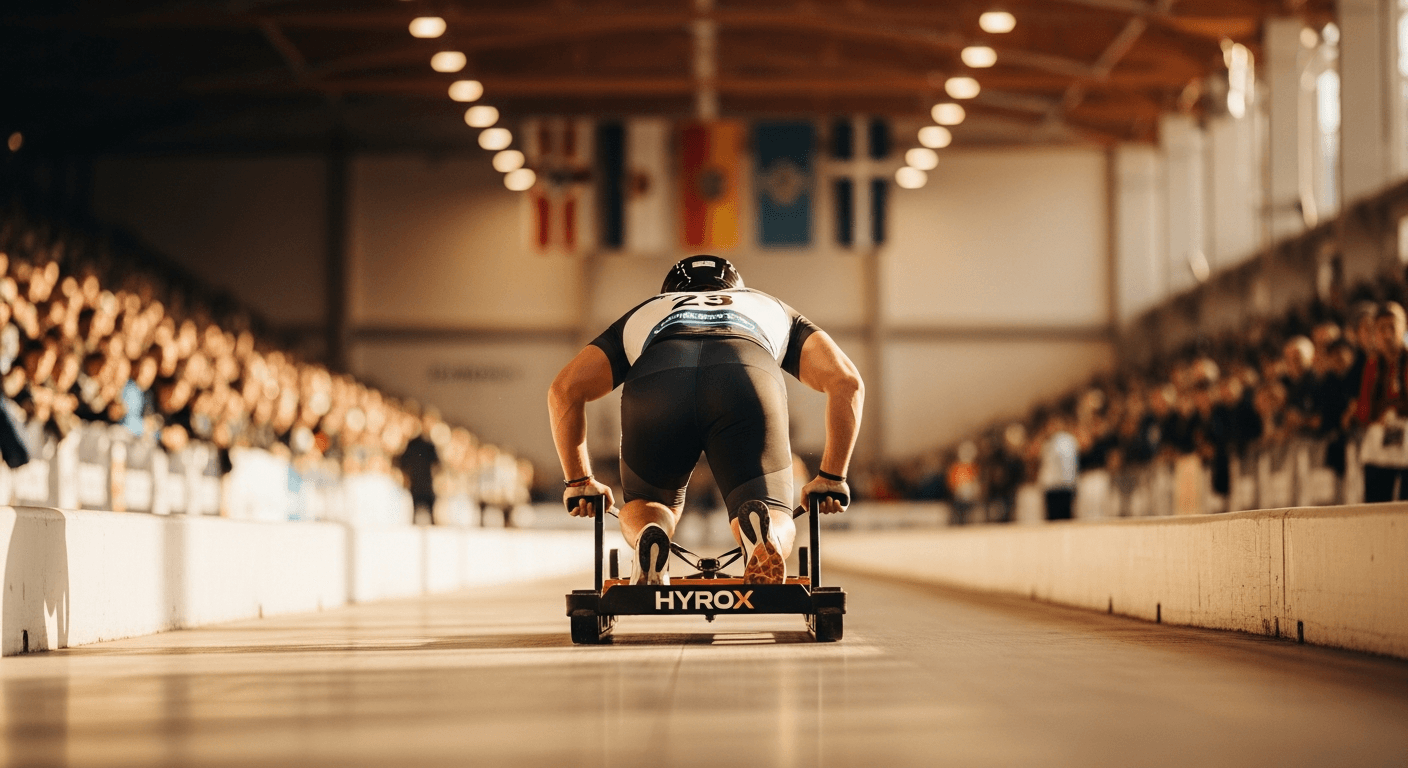
Berlin is live. As of May 22, one of HYROX's most anticipated European stops has officially opened its doors, and it won't close until May 31. That's a ten-day window that makes this event one of the longest on the entire 2026 calendar. Whether you're competing this week or tracking the leaderboard from home, this is your central reference point for results, athlete performance, and everything unfolding at the Berlin event.
This isn't just another stop on the circuit. Berlin carries weight. It sits at the heart of a back-to-back European double-header that's reshaping how competitive athletes approach the second half of their qualifying season.
Where Berlin Fits in the 2026 Season
The timing of Berlin is no accident. It follows directly on the heels of HYROX Lyon 2026, which ran from May 20 to 24, making this a punishing stretch for any athlete who raced in France and is now toeing the line in Germany. For those chasing qualifying points toward the HYROX World Championship, the back-to-back format raises the pressure considerably. Every podium finish, every personal best, every qualifying slot matters more when the events are stacked this close together.
For athletes already planning their race schedule beyond Berlin, the full HYROX 2026 calendar still has significant races to come, and Berlin's results will shape how competitors prioritize the remaining months of the season. Points standings shift fast at this stage, and Berlin is a major opportunity to move up.
How to Follow Results in Real Time
All live results for HYROX Berlin 2026 are being tracked through HYRESULT, the official HYROX data platform. HYRESULT provides real-time athlete analytics including split times across all eight workout stations, overall finish times, category rankings, and wave-by-wave updates throughout each competition day.
To track a specific athlete, you can search by name or bib number directly on the HYRESULT platform. Results are updated continuously as athletes cross timing mats, so the leaderboard you're looking at is generally accurate within minutes of each wave finishing. This is especially useful for relay and doubles categories where team dynamics can change the race picture quickly.
The platform also surfaces historical comparisons, so you can see whether an athlete is tracking ahead or behind their previous Berlin performance if they've competed here before. That context is useful when evaluating whether a strong finish reflects peak form or simply a favorable wave time.
The Competition Format: Who's Racing
Berlin draws competitors across every HYROX participation category. That includes individual men and women, pro divisions, doubles (same-sex and mixed), and relay teams. The sheer volume of athletes across a ten-day window means results roll in continuously, and the elite picture often doesn't fully crystallize until the final competition days when the fastest waves are typically scheduled.
Here's a quick breakdown of the categories active at Berlin 2026:
- Individual Open (Men and Women): The largest category by volume. Most recreational competitors enter here.
- Individual Pro (Men and Women): Elite division. Athletes in this category are generally targeting World Championship qualification.
- Doubles (Same-Sex and Mixed): Two athletes share all eight workout stations and the 1 km running loops. Strategy and pacing between partners becomes a major factor.
- Relay (4-person teams): Each team member completes specific stations, making it the most accessible entry point for athletes new to the format.
Berlin consistently ranks among the highest-participation events on the European calendar. The ten-day format is part of the reason. Spreading waves across multiple days allows organizers to accommodate far more athletes than a single-weekend event, and it means the competitive field is genuinely diverse. You'll see first-timers running in the same venue where seasoned pros are chasing qualifying marks.
What the Lyon Results Tell Us About Berlin Contenders
Any honest analysis of Berlin's competitive landscape has to account for Lyon. Athletes who performed well in Lyon and then turned around to race Berlin within days are either extraordinarily fit or gambling on recovery. That's a factor worth watching in the pro divisions specifically.
On the flip side, some competitors deliberately skipped Lyon to arrive in Berlin fresh. That split in preparation strategy is one of the more interesting storylines in the 2026 European spring sequence. When you're looking at pro division results from Berlin, it's worth noting which athletes raced Lyon and which ones arrived rested. The data from HYRESULT often tells that story through split time patterns. Athletes carrying fatigue tend to lose time on the running segments before the later workout stations, where accumulated effort catches up with them.
The Eight Stations: Where Races Are Won and Lost
For those less familiar with the HYROX format, the race structure pairs eight 1 km runs with eight functional fitness stations completed in a fixed order. The stations are:
- 1,000m SkiErg
- 50m Sled Push
- 50m Sled Pull
- 80m Burpee Broad Jumps
- 1,000m Rowing
- 200m Farmers Carry
- 100m Sandbag Lunges
- Wall Balls (75 to 100 reps depending on division)
In Berlin's pro divisions, the difference between podium finishes and fourth place often comes down to two or three stations. The Sled Push and Sandbag Lunges are historically the biggest time differentials among elite competitors. Recreational athletes tend to lose more time on the SkiErg and Wall Balls, particularly in the final stages when glycogen is depleted and technique breaks down.
If you're competing at Berlin this week and want to sharpen your approach before race day, understanding where your personal weaknesses lie is the starting point. If you haven't already locked in a structured preparation plan, knowing how much training you actually need for HYROX is a practical first step that many athletes underestimate.
Nutrition and Recovery Between Waves and Events
With Lyon having just closed and Berlin spanning ten days, the conversation around fueling and recovery is unusually relevant right now. Athletes who raced Lyon and are now in Berlin need to approach this week differently than those arriving fresh.
Carbohydrate replenishment and timing are central to any serious recovery protocol in back-to-back event scenarios. Carb timing for endurance athletes follows specific principles around glycogen restoration that apply directly to HYROX, where running volume is high and functional work demands additional fuel reserves.
Hydration is equally critical. Berlin in late May brings unpredictable conditions inside large competition halls. Sweat rates vary significantly between athletes, and generic hydration guidelines often fall short for competitors who are working at high intensity for 60 to 90 minutes in a warm indoor environment. Getting your personal hydration strategy right before race day is not optional at this level.
What to Watch as Berlin Progresses
Several storylines are worth tracking over the remaining days of the event window:
- Pro division final waves: Elite competitors are typically scheduled in the later waves, and those results will define Berlin's competitive legacy for 2026.
- Double-header recovery impact: Watch for unusual split patterns in athletes who raced Lyon, particularly on the running segments in the second half of the course.
- Relay standouts: Berlin's relay category often surfaces names that go on to compete individually at later events. It's worth paying attention to team performances, especially if individual splits are made available.
- Points implications: For athletes within striking distance of World Championship qualification, Berlin's results could determine whether they need to race another European event before the season closes.
This page will continue to reflect the most relevant developments from Berlin as the event window runs through May 31. Check back as pro division results finalize and the full leaderboard takes shape. HYROX Berlin 2026 is ten days of racing, and the story won't be complete until the last wave crosses the finish line.