
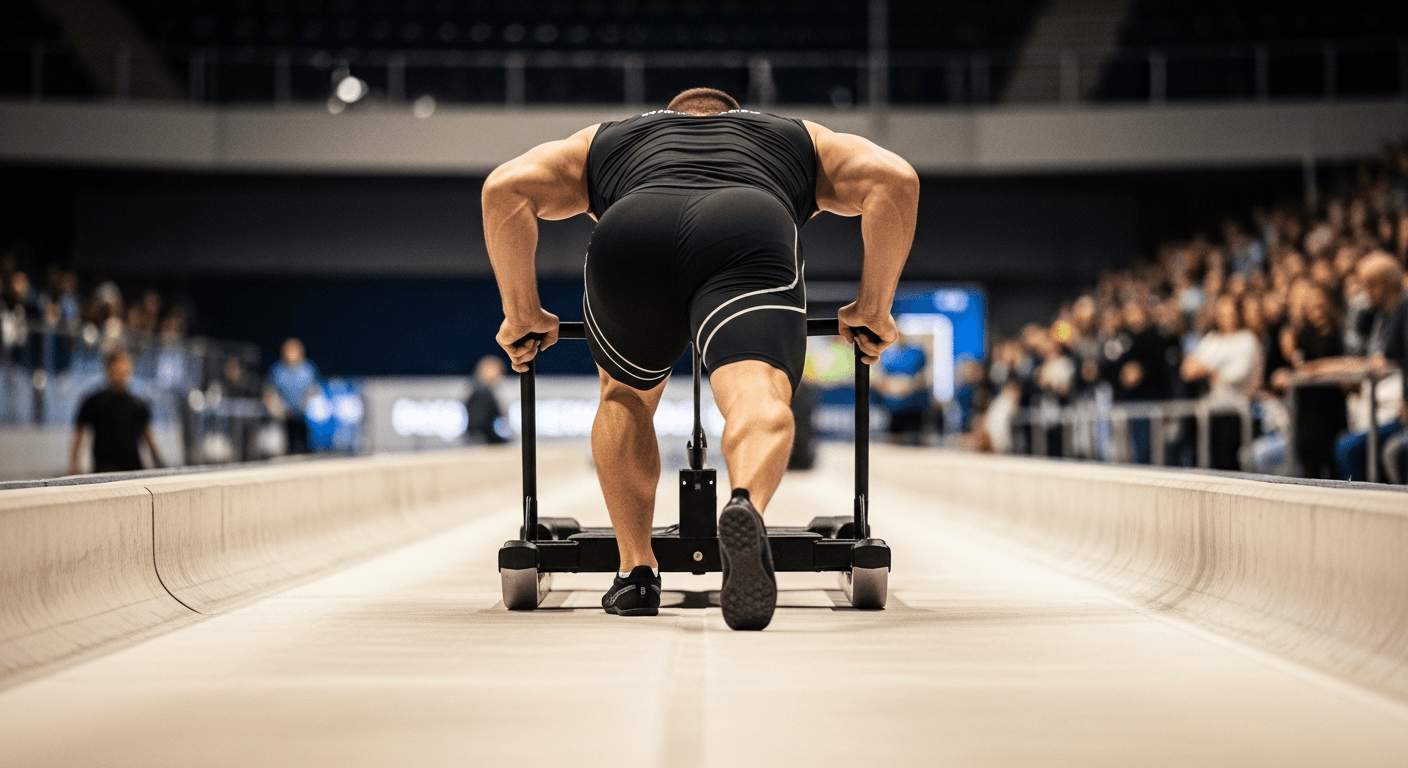
HYROX arrived in Lyon this week, and the results are already telling a story. The event runs May 20–24 at Eurexpo Lyon, marking the first time the city has hosted a HYROX competition at any level. Five days, thousands of athletes, and a brand-new European venue. Here's what the early data is showing.
What Lyon Means for the 2026 Calendar
HYROX has been methodical about its European expansion, and Lyon is one of the clearest signals yet of how far that strategy has come. Adding a major French venue outside Paris gives the series a second anchor point in the country and opens the event to a different athletic demographic. Lyon has a strong endurance and CrossFit community, and early registration numbers suggested organizers were expecting significant local turnout.
This isn't a standalone move. The 2026 calendar reflects a broader push to plant HYROX in cities with established fitness infrastructure rather than just major capitals. Lyon fits that profile. Eurexpo, the venue hosting the event, is one of the largest convention and exhibition centers in Europe, with the floor space to run a full HYROX setup including all eight workout stations without the layout compromises that some smaller venues require.
For context on how quickly HYROX has been scaling its event footprint, HYROX ran six cities in one weekend in May 2025, a logistical benchmark that showed the organization could execute at volume without sacrificing timing accuracy or athlete experience. Lyon continues that momentum.
How HYRESULT Is Tracking the Field
Real-time analytics have become one of the defining features of the HYROX experience, and HYRESULT is running full live tracking for Lyon. That means you can pull splits by station, compare your performance against athletes in the same age group or division, and watch how the field distribution shifts across each wave of competitors.
For a debut market, this data is particularly useful. It establishes a baseline. When Lyon runs again in future years, athletes and coaches will be able to benchmark against this first dataset and see whether standards are rising, where local athletes are strong, and which stations are consistently underperforming across the field.
The platform tracks time spent at each of the eight workout stations plus your running splits across the 1km loops. This granularity is what separates HYROX's analytics offering from most mass-participation fitness events, which typically only report a finishing time. At Lyon, you're getting a complete performance profile from the moment you cross the start line.
Which Stations Are Separating the Field
Based on early results emerging from HYRESULT during the first competition days, a few patterns are standing out in the Lyon debut field.
The Ski Erg is showing a wider spread than typical for this station. A well-paced ski erg should produce a tight distribution among trained athletes, but Lyon's field appears to include a higher proportion of first-time competitors who are underestimating the cardiovascular cost of the opening station. Starting too hot here compounds across every station that follows.
The Sandbag Lunges are, as expected, one of the biggest differentiators in the field. This station consistently separates athletes who have specifically trained for it from those who haven't. Stride length, breathing pattern, and sandbag position all affect how efficiently you move through this station. If you're planning a future HYROX race and want to protect your finish time, shorter steps are the counterintuitive fix that saves your HYROX finish.
The Wall Balls are producing notable drop-off in the women's open division in particular. This tends to happen at debut markets where athletes are strong runners but less experienced with the strength-based stations. The wall ball requires both shoulder endurance and precise hip drive. Without specific prep, athletes are breaking their sets earlier than planned and losing significant time.
The Rowing station is performing closer to expected distributions, which suggests Lyon's field has enough endurance athletes familiar with the movement to normalize results there. CrossFit-trained athletes tend to have an advantage at the rower, and the city's fitness culture appears to reflect that.
Field Depth at a Debut Event
Debut events always carry a specific character. You get a mix of experienced HYROX athletes who have traveled specifically for the new venue, local athletes competing for the first time, and a significant bracket of recreational participants who signed up because the event was accessible. Lyon is no different.
What HYRESULT is revealing is a longer tail in the finishing times than you'd see at an established HYROX city like Hamburg or London. That's not a criticism. It's what a healthy debut looks like. The depth at the front of the field is solid. The pro and elite divisions are posting times competitive with other 2026 European stops, which confirms that Lyon attracted serious competitors, not just local curiosity.
The middle of the field is where the debut character shows most clearly. There's a cluster of athletes finishing in the 75–90 minute range who would benefit from targeted station work before their next race. The data from this event will be useful for coaches working with clients who raced Lyon and want a structured analysis of where time was lost.
Recovery Starts the Moment You Finish
With four to five days of racing at Eurexpo, athletes who competed early in the week are already thinking about recovery. HYROX places a significant combined load on your aerobic system and your muscular endurance, particularly in your posterior chain, shoulders, and legs. The combination of running and loaded stations means your body is dealing with multiple stress types simultaneously.
Whether you raced Lyon on day one or you're competing at a future stop, expert-backed recovery protocols after a HYROX race emphasize getting protein in within 30–60 minutes of finishing, prioritizing sleep in the 48 hours following, and avoiding the temptation to do any meaningful training in the first three days post-race. The goal in that window is adaptation, not additional stimulus.
Nutrition during recovery matters as much as training does. The post-workout protein window is real, but it's more flexible than old-school sports nutrition suggested. Hitting your daily protein target consistently over the days following your race is more important than obsessing over a 20-minute window after you cross the finish line.
What Lyon Tells Us About HYROX's Direction
The decision to add Lyon to the 2026 calendar reflects a specific strategic logic. HYROX isn't chasing vanity metrics around city count. It's building a network of venues that can sustain multi-day events, attract athletes from across a region, and generate the kind of multi-year community that turns a one-time participant into a loyal competitor who travels to three or four events per year.
Lyon sits within reasonable travel distance of athletes in Switzerland, Belgium, and northern Italy, not just domestic competitors. That geographic catchment makes it more than a local event. The Eurexpo venue supports that ambition. Multi-day formats require logistics that smaller venues simply can't handle, and having the right infrastructure from day one sets Lyon up for a legitimate long-term position on the calendar.
For athletes planning their 2026 or 2027 race schedules, Lyon is worth watching. Debut editions typically have better availability and registration pricing than established stops, which tend to sell out months in advance at higher price points. Entry fees for HYROX events have generally ranged from around $120 to $180 USD depending on category and timing of registration. Getting into Lyon early in its run could offer both value and a less crowded race-day experience before the event scales to full capacity.
How to Use the Lyon Results for Your Own Training
Even if you didn't race Lyon, the debut results on HYRESULT are a useful training reference. Look at the station splits in your division and the finishing time percentiles. If you're a trained athlete targeting a sub-60-minute finish at your next HYROX, the Lyon data shows you exactly which stations are eating the most time across the field and where marginal gains are available.
The pattern at Lyon confirms what data from other events has shown consistently: running fitness is rarely the limiting factor for mid-field athletes. Most people who train for HYROX run regularly. The separation happens at the loaded stations, particularly sandbag lunges, wall balls, and farmers carry. If those three stations are where you're losing ground, that's your training priority for the next race cycle.
HYROX Lyon 2026 is four days into what could be a long-running fixture on the European calendar. The field is competing, the data is live, and the results are already building a picture of what fitness looks like in this new market. Whether you're chasing a podium spot or your first sub-90 finish, that picture is worth paying attention to.