
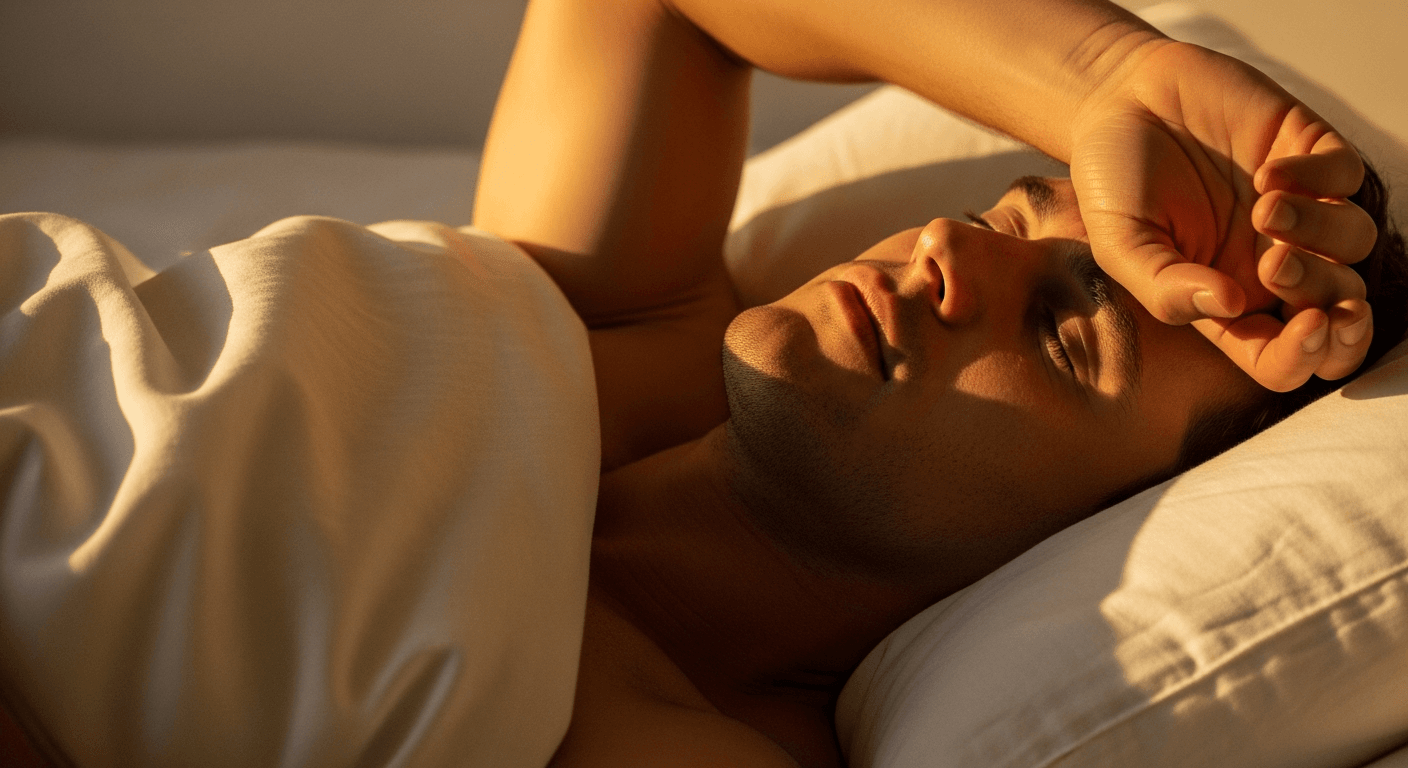
The Third Annual Global Sleep Symposium was held today (June 4, 2026) at Equinox Hotel New York. Keynote: Dr. Matthew Walker, author of Why We Sleep. His central message: sleep isn't just a recovery tool — it's the variable that determines cognitive performance at the moments that matter most.
Key Takeaways
- Theme: how sleep shapes performance for the rest of your life — decision-making under pressure, creative breakthrough, cognitive resilience
- Walker emphasized sleep quality, not just duration
- In 2026, wearable sleep tracking has become the dominant wellness habit — but obsession with metrics can create its own stress
- Cognitive resilience degrades rapidly at 6 hours of sleep or less
Walker on performance under pressure
The core of Walker's keynote centered on what happens in the sleep-deprived brain when facing a high-stakes decision. The data he presented is consistent with his prior research: at 6 hours of sleep or less, the prefrontal cortex — responsible for rational decisions, emotional regulation, and planning — starts to fail. Specifically:
- Risk assessment becomes distorted — people tend to under- or over-estimate risk based on emotional state
- Cognitive flexibility (the ability to switch strategies when a current approach isn't working) decreases
- Error resilience (the ability to recover after a bad decision) collapses
For an athlete or executive, these three degradations translate directly into suboptimal performance at high-pressure moments: end of race, difficult negotiation, decisive game. Poor sleep reduces strength by up to 10% and drops testosterone by 15% — numbers that compound when the moments that matter most arrive.
Creative breakthrough and REM sleep
Walker also expanded on the link between REM sleep and creativity. REM is the phase when the brain connects seemingly unrelated pieces of information — which is precisely the mechanism behind creative problem-solving. Walker cited 2026 research on sleep and athletic performance showing that people who sleep adequately (reaching multiple REM cycles) are significantly more likely to find non-linear solutions to complex problems the following day.
Practical takeaway: athletes, artists, scientists who are "searching for something" should sleep before forcing the solution.
The 2026 trend: measure without spiraling
The Symposium also addressed the paradox of sleep tracking in 2026. Wearables (Oura Ring, Apple Watch, Whoop) and sleep apps have become the dominant wellness habit for tech-forward users. But some researchers flagged an emerging concern: orthosomnia — the anxiety generated by reading your own sleep score. Looking at your sleep score first thing in the morning can generate enough stress to degrade the quality of the following night.
The Symposium consensus: tracking tools are useful for identifying multi-week patterns, not for optimizing every single night. A bad score one night doesn't mean the day will be bad.