
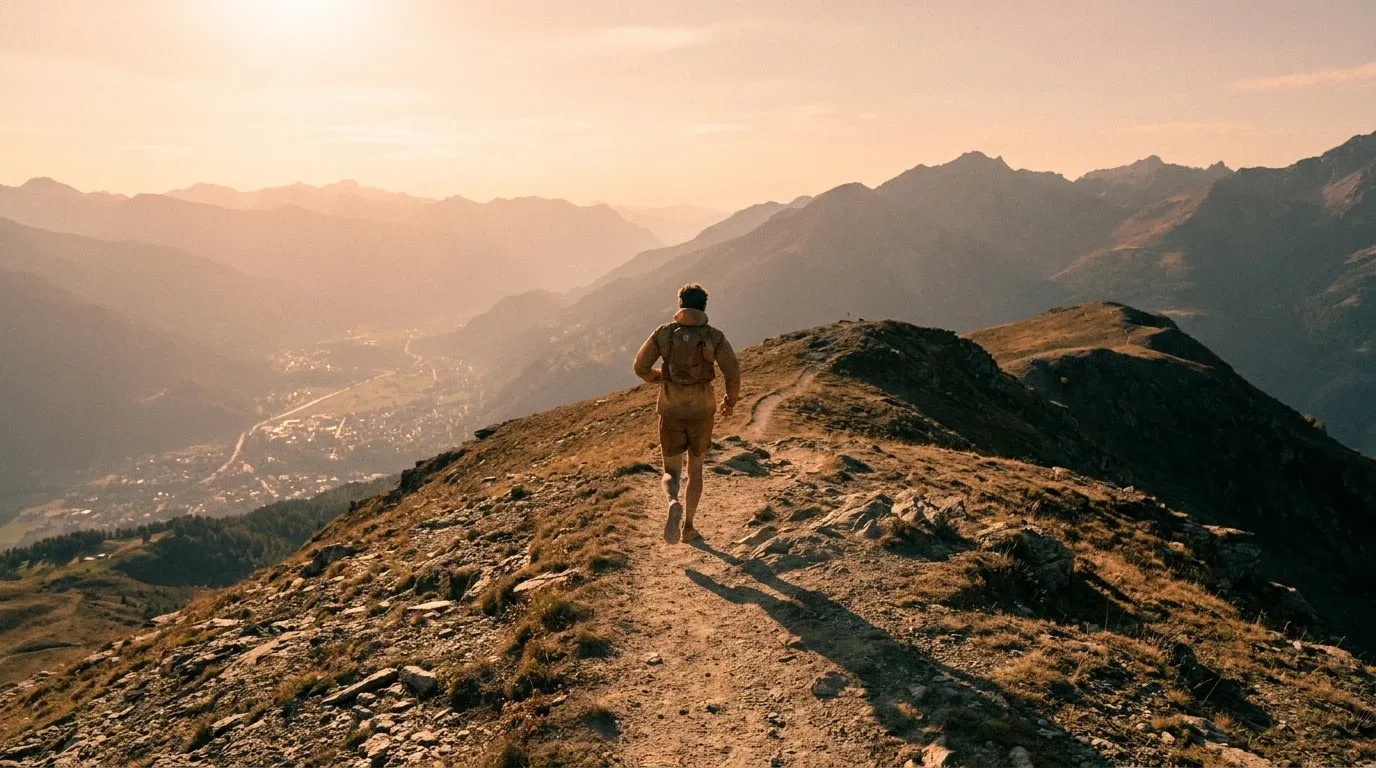
On September 22, 2026, Crans-Montana hosted the Wildstrubel by UTMB. The mountain resort in Switzerland's Valais region delivered a large-scale trail event without the gridlock, resident complaints, or logistical meltdowns that have become routine in Chamonix during UTMB's flagship week. Runners finished their races, found their drop bags, and slept in actual beds. The host town functioned. It sounds basic. In elite trail running, it increasingly isn't.
The question that event raised isn't just about one Swiss resort doing things right. It's about what the sport's geography should look like as trail running's global participant base keeps growing. The answer points clearly toward distribution, not concentration.
What Chamonix Actually Represents
Chamonix is trail running's spiritual home, and that status comes with real costs. The town has a permanent population of around 10,000. During UTMB week, it absorbs tens of thousands of runners, crew members, spectators, and media. Hotels fill months in advance. Prices spike. Locals who aren't in the race economy find the week disruptive at best, intolerable at worst.
The sport's relationship with Chamonix has become a story of diminishing returns. More prestige, more entrants, more pressure on infrastructure that was never designed for this volume. The race itself remains extraordinary. The experience around it has become something you endure rather than enjoy, especially for mid-pack runners who aren't getting elite treatment and aren't local.
This is a pattern playing out across endurance sports globally. Marathon participation is breaking records in 2026, and the sport is learning that concentrating that demand in a handful of iconic venues creates problems for everyone: the host communities, the runners, and the long-term health of the events themselves.
UTMB's Franchise Model Is Already the Answer
UTMB Group saw this coming. Their franchise model, which expanded significantly after the Ironman-style commercial pivot, now spreads races across multiple continents and dozens of host venues. Switzerland. Turkey. Spain. Japan. South Korea. The Kaçkar by UTMB in Turkey's Black Sea mountains is one of the sharper examples of the model working as intended: a technically demanding course, a community with genuine hosting capacity, and a runner experience that doesn't require battling 15,000 other people for a pasta dinner.
The logic is straightforward. If you can preserve the UTMB qualification currency while distributing where runners physically show up to earn those points, you reduce the load on any single destination. The brand travels. The infrastructure burden doesn't have to.
Critics of the franchise model have legitimate concerns about commercialization and the dilution of what made the original race meaningful. Those critiques deserve serious consideration. But the geographic distribution piece is genuinely good for the sport. More venues competing for runners means more incentive to get the experience right.
Why Smaller Hosts Outperform Saturated Ones
Crans-Montana's performance on September 22 illustrated something that race organizers and tourism boards in smaller mountain communities should pay close attention to. The resort had capacity headroom. Its roads, restaurants, and accommodation stock weren't already at maximum throughput before a single runner crossed the start line.
That headroom translates directly into runner experience. Shuttle buses that actually run. Aid stations that aren't overwhelmed. Post-race recovery spaces where you can sit down. The details that matter most after you've been moving through mountains for six or sixteen hours.
It also translates into economic impact that's felt more broadly. When a major event arrives in Chamonix, the money largely flows into an existing, well-developed tourism machine. When it arrives in a smaller venue, the economic lift is proportionally larger and reaches further into the local community. Hotels, local guides, equipment rental shops, restaurants that don't normally see this volume: all of them benefit in ways that genuinely move the needle for a smaller regional economy.
The tension between residents and race organizers that has surfaced in places like Chamonix, Zermatt, and similar high-saturation destinations largely disappears when a host community still has capacity to absorb the event. People tend to welcome economic activity that doesn't also make their town unlivable for a week.
The Elite Racing Picture Is Shifting Too
It's not just participation events that are distributing. The competitive calendar is diversifying in ways that matter for the sport's elite tier. The Trail World Cup circuit has introduced competitive pressure across a wider range of venues, and results from those events are reshaping the conversation about who belongs at the top of the sport.
Races like the Rollercoaster 21, where Dentis and Nilsson claimed Trail World Cup victories, are generating genuine sporting drama outside the traditional prestige circuit. Athletes who build their seasons around a broader race map are finding that the sport's audience follows compelling competition regardless of postcode. Elite runners like Maya Rayle, one of trail running's rising elite voices, represent a generation comfortable building their profiles across multiple events rather than staking everything on a single iconic finish line.
That's healthier for athlete development, for competitive depth, and ultimately for spectator interest. A sport with five meaningful races is more engaging than one with a single unmissable event surrounded by also-rans.
What This Means If You're Choosing Your Next Race
If you're a runner planning your 2026 or 2027 calendar, the geographic distribution of trail events is directly relevant to your experience and your wallet. Here's what's actually available to you now that wasn't a decade ago.
- More entry points at reasonable cost. A UTMB-series qualifier in Turkey or a regional trail race in the Swiss Jura costs a fraction of what you'd spend traveling to, entering, and lodging in Chamonix. Race entry fees for mid-tier UTMB series events typically run $200 to $350, versus the $500-plus total entry costs for the flagship. Add accommodation and the gap widens considerably.
- Lower competition for entry. The lottery pressure that defines UTMB's flagship is not a feature of smaller franchise events or independent regional races. You can plan around a race you're confident you'll get into.
- Fresher course experiences. Courses in less-traveled mountain regions offer terrain that isn't worn into a groove by a decade of elite and mass-participation traffic. The running itself is often better.
- Genuine local culture. Smaller host towns haven't yet optimized every storefront for trail runner spending. That's actually a good thing. The coffee shop owner doesn't hate you yet.
Preparation matters regardless of where you race. Getting your race-week nutrition dialed in before a mountain event is as important in Crans-Montana as it is in Chamonix. And the mental preparation required for a fall trail race doesn't change based on how famous the venue is. What changes is how much logistical friction you're fighting on top of the race itself.
The Broader Lesson for a Growing Sport
Trail running's growth over the past decade has been remarkable. Participation rates that were niche in 2015 are mainstream in 2026. That growth brings money, attention, and infrastructure investment. It also brings the specific problems that come when a sport's demand exceeds the capacity of its traditional homes.
The smartest response isn't nostalgia for when fewer people ran mountain trails. It's building a smarter event map. One that uses iconic venues for what they do best: generating aspirational energy and hosting flagship competition. And one that routes the majority of participants toward venues that can actually serve them well.
The Crans-Montana model on September 22, 2026 wasn't perfect. No event is. But it demonstrated that a non-Chamonix venue, given the right event framework and the organizational capacity to execute, can deliver an experience that the sport's most famous address currently struggles to match. That should matter to every race director, tourism board, and runner planning their next season.
The sport doesn't need fewer great races. It needs more venues capable of hosting them. The geography of trail running in 2026 and beyond should reflect that. Crans-Montana is a useful reminder of what's possible when a host town still has room to breathe.