
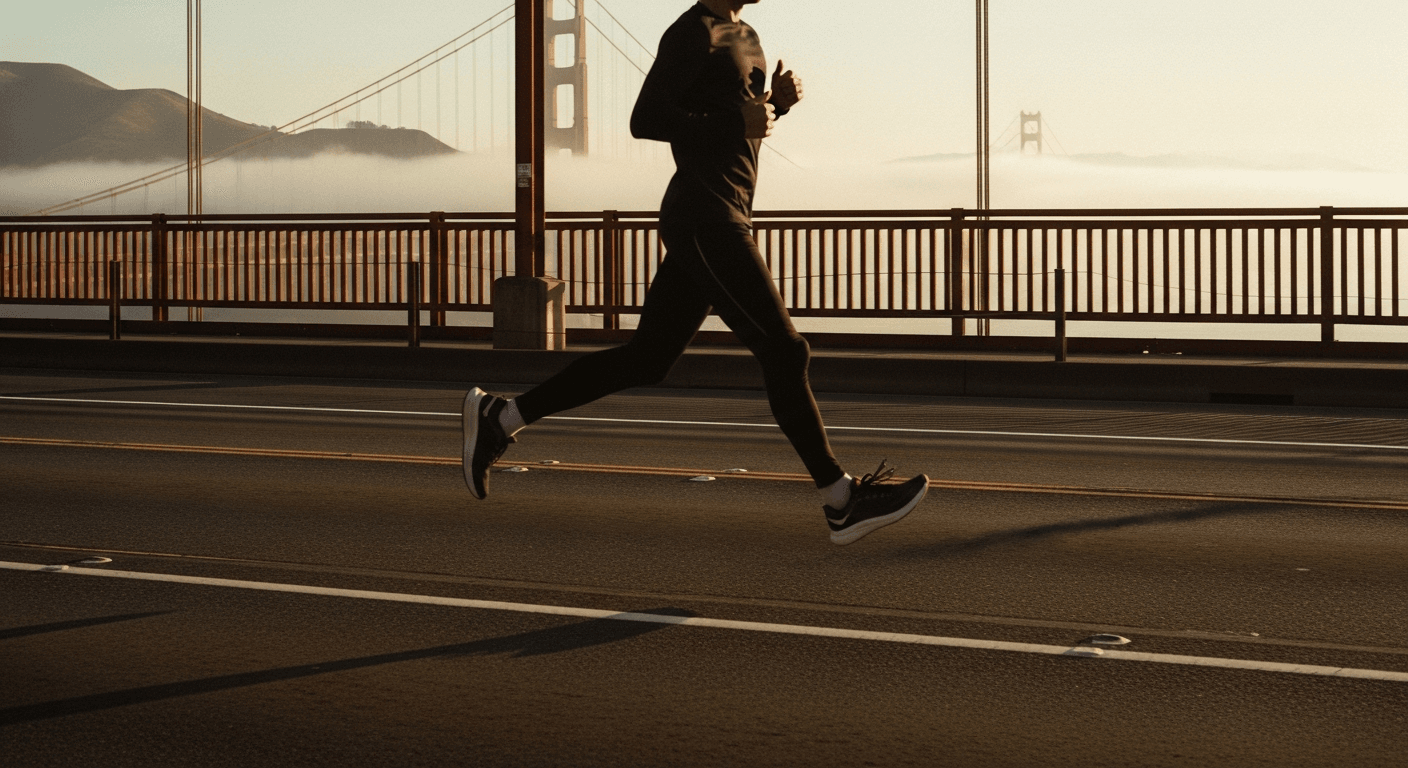
The San Francisco Marathon is one of the most iconic races on the West Coast — and one of the most demanding. On July 25, 2026, thousands of runners will cross the Golden Gate Bridge, trace the bay, climb the city's steep streets, and finish with a bang at Oracle Park. Whether you're already registered or still considering it, here's what you actually need to know to prepare properly.
Key Takeaways
- Date: July 25, 2026 (half marathon July 26). Start time: 5:30 AM to avoid daytime heat
- Total elevation gain: ~720 feet — mainly in the first 9 miles and the Golden Gate crossing
- Typical weather: 54-65°F in July San Francisco — ideal running conditions, but coastal wind can surprise
- Critical sections: the Golden Gate climb (miles 2-3) and Hayes Hill (mile 17) are the two major challenges
- Key strategy: start conservative on the first climb to avoid blowing up after mile 16
The course in detail
The San Francisco Marathon isn't a flat race. Its appeal comes precisely from crossing the city and its exceptional scenery — but the elevation has to be paid for.
Miles 0-5: leaving downtown toward the Golden Gate. The opening miles trace the waterfront from the Ferry Building through Fisherman's Wharf, climbing progressively toward the bridge. The Golden Gate approach (miles 2-3) is the first major challenge — 200 feet of gain in under a mile and a half. The strategy is simple: take it conservative, don't get carried away by start excitement and the view.
Miles 5-14: across the Bridge, Sausalito, and the Presidio. Crossing the Golden Gate is the most photographed moment of the race. After the bridge, an out-and-back to Sausalito offers a spectacular view of San Francisco. This section is relatively runnable — it's where you can reload after the first climb.
Miles 14-22: crossing the city. The course re-enters San Francisco through the Presidio and begins threading through neighborhoods — Haight, Mission, Potrero Hill. The Hayes Valley climb (around mile 17) is often the hardest section mentally: your legs are already loaded and there are still 9 miles to go.
Miles 22-26.2: the final stretch. The last miles trace the bay toward Oracle Park. Relatively flat, but at this point in the marathon, every step counts. The finish inside the ballpark is the moment to leave everything out there.
Weather: San Francisco's underrated July advantage
Unlike most summer marathons, San Francisco has naturally cool weather in July. The coastal fog (the locals' famous "Karl the Fog") keeps temperatures low in the morning — often 54-60°F at the 5:30 AM start. Those are ideal running conditions.
The nuance: wind. On the Golden Gate Bridge, lateral wind can be strong and unpredictable. A light jacket or thin windbreaker for the first few miles can make a real difference in comfort. And plan to cover up at the finish — temperatures stay cool even after you stop running.
Recommended race strategy
The SF Marathon course rewards patient runners. The first 10 miles have more elevation than the final 16 — runners who go out too fast pay dearly from mile 17 onward. A negative split (running the second half faster) or at minimum an even pace is the strategy behind most strong performances here.
For a first marathon or if you're just going for the finish: target a pace you could hold effortlessly for the first 3 miles. If you're holding back on the Golden Gate climb, that's a good sign. If you're pushing hard up the hill, you'll pay for it at mile 19. Getting your race day fueling strategy dialed in before the start is just as important as managing your effort on the climbs.