
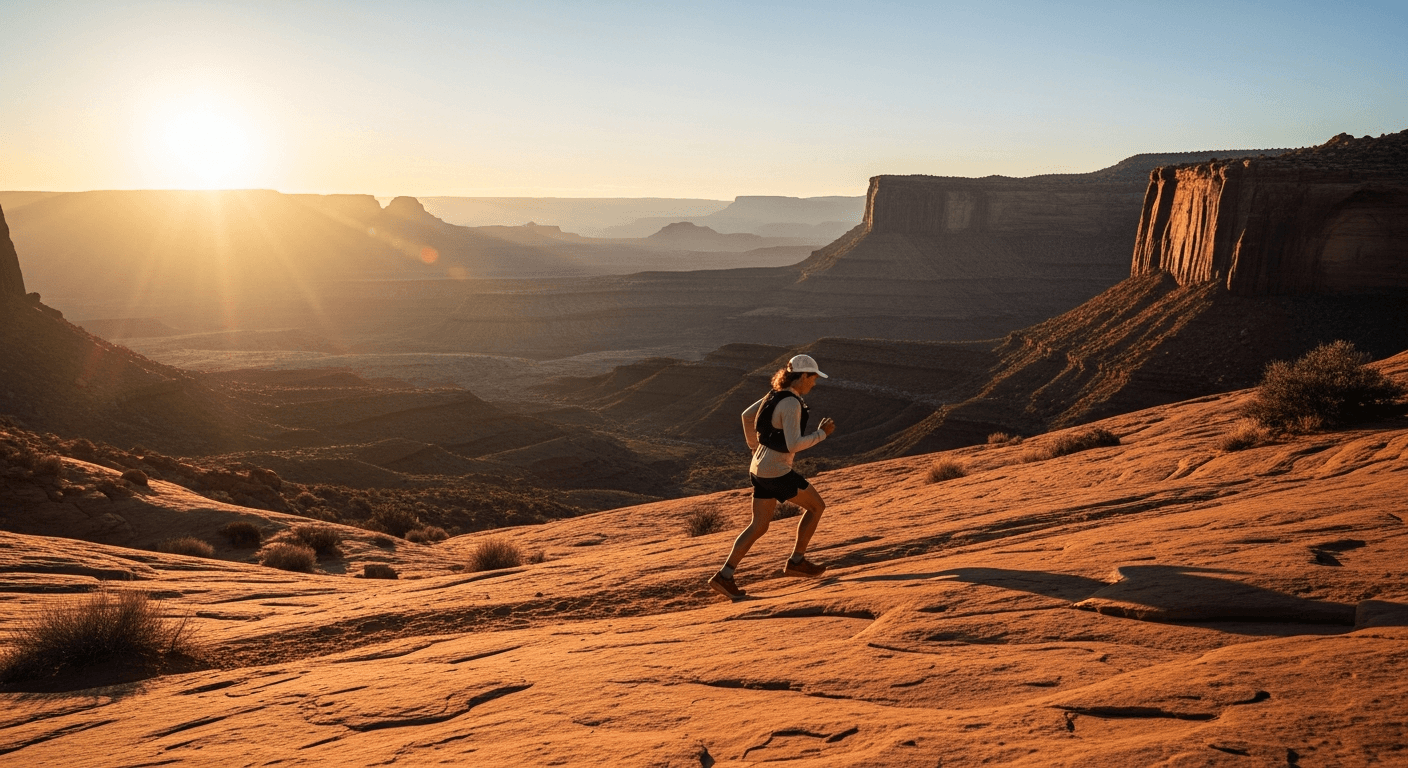
Most race previews tell you the distance, the elevation gain, and the cutoff times. What they rarely tell you is what it actually feels like to stand at the start line in Moab, Utah, at dawn, with red sandstone walls rising around you and slickrock stretching toward the horizon. UltraSignup's Behind the Bib series is trying to change that, and its coverage of Run The Rocks gives prospective runners something genuinely useful: an honest, unfiltered look at race day before you commit your entry fee and plane ticket.
Why Moab Hits Different as a Race Venue
There are beautiful trail races across North America. Moab is something else. The landscape around Canyonlands and Arches National Park is visually unlike anything most runners encounter in their training environments. Towers of red and orange sandstone, wide desert sky, and the kind of silence that only exists when you're miles from a road. Run The Rocks puts athletes directly into that environment, routing courses through terrain that looks like it belongs in a film set rather than a race calendar.
The slickrock itself deserves attention. Unlike packed dirt trails or forest singletrack, slickrock is smooth Navajo sandstone that requires a different kind of foot placement and mental focus. It's grippy when dry, which sounds reassuring, but it rewards careful technique over raw speed. First-timers often describe the sensation as running across a frozen wave. The visual distraction is real too. You're looking at the scenery when you should be watching your footing.
That combination of technical surface and dramatic backdrop is a large part of what makes destination trail races like Run The Rocks so appealing. Runners aren't just signing up for a timed event. They're building a trip around an experience that a road race in a city park simply can't replicate. This shift toward travel-oriented racing is one of the clearest trends in the sport right now, and it's worth understanding why Moab sits near the top of that category. For more on how participation patterns are shifting, why the half marathon is the fastest-growing race distance in 2026 offers useful context on where the broader running market is heading.
What Behind the Bib Actually Shows You
UltraSignup's Behind the Bib format was built around a simple premise: runners make better decisions when they have real information. Race websites give you maps and gear lists. Behind the Bib gives you the parking situation, the pre-race energy, the look on a runner's face at mile eight when the elevation hasn't let up.
The Moab edition captures several things that traditional race coverage misses. You see the logistics of a desert start line, which means early alarms, cold mornings that warm up fast, and aid stations spaced across open terrain where there's no shade to speak of. You see runners calibrating their effort in real time, making decisions about pace and hydration that aren't in any training plan. You see the finish line atmosphere, which in a race this size feels personal rather than anonymous.
That kind of footage helps you answer the question that actually matters before registration: is this race right for me right now? Not whether you're capable of finishing a trail race in theory, but whether this specific course, in this specific environment, at this point in your training, fits your goals. Behind the Bib treats runners as adults who can handle honest information, which is rarer than it should be in race marketing.
The series also captures the community texture of smaller destination races. Run The Rocks draws runners who have made deliberate choices to be there, people who planned the trip months in advance, coordinated with partners or training groups, and treated the event as the centerpiece of a longer adventure. That intentionality shows in how people interact at the start and finish. It's a different atmosphere from a large urban mass-participation event.
The Altitude and Terrain Factor: Pacing for the Desert
Here's where prospective runners need to pay real attention. Moab sits at roughly 4,000 feet above sea level, and depending on the specific course routing, you may spend significant time higher than that. For runners coming from sea level, this matters more than most training plans acknowledge.
At altitude, your body delivers less oxygen per breath. The effect is subtle at 4,000 feet compared to high alpine races, but it compounds with heat, technical terrain, and any pre-existing fatigue from travel. Runners who treat their first mile on Utah slickrock the same way they'd treat the first mile of a flat road race typically pay for it by the second half of the course. The standard recommendation from sports physiologists is to reduce your perceived effort target by around 10 to 15 percent for the first major segment of any race above 3,500 feet, especially if you've had fewer than three days to acclimatize.
The technical terrain adds another layer to pacing strategy. Slickrock sections require shorter strides, more lateral stability work from your ankles and hips, and constant micro-adjustments that don't show up in your pace per mile but do show up in your energy expenditure. Your GPS watch will tell you one thing. Your legs will tell you something else. Experienced desert runners typically go by effort and heart rate rather than pace targets on terrain like this.
Hydration planning also looks different in the desert. Morning temperatures in Moab can feel manageable, but the combination of low humidity and direct sun exposure accelerates fluid loss faster than many runners expect. Sodium intake becomes a practical priority, not just a nice-to-have. What you eat in the days before the race matters too. For evidence-based guidance on fueling around hard efforts, how to time your meals around your workouts covers the pre-race and race-day nutrition windows in detail. And if inflammation management is part of your recovery approach, anti-inflammatory foods for athletes: what the evidence shows is worth reviewing before a multi-day desert trip.
Run The Rocks as a Destination Race: What to Plan Around
Run The Rocks is not a race you drive to at 6am and drive home from by noon. If you're flying in from outside the region, you're planning at minimum a long weekend, and most runners who travel for it build three to five days around the event. Moab has a concentrated infrastructure of trail-oriented accommodation, from camping near the park boundaries to small hotels and rental properties that cater specifically to outdoor athletes.
The race itself typically offers multiple distances, which matters for groups traveling together with different fitness backgrounds or goals. Having options within the same event ecosystem means you don't have to split up across different races to participate together. It also means you can make a realistic assessment of your current fitness rather than defaulting to the longest distance because it's there.
Race fees for destination trail events like Run The Rocks typically land between $80 and $150 depending on distance and registration timing, which is competitive with comparably sized trail races in the US market. The total trip cost is obviously higher when you factor in travel, but that's the deliberate point. You're not just buying a race entry. You're buying a reason to go somewhere you want to be.
The broader ultra and trail calendar around this time of year gives you options if you want to combine races or scout the region for future events. The May 2026 ultra trail running weekend roundup is a good reference for what's happening across the western race circuit in the same period.
Should You Register
Run The Rocks is a strong choice if you meet a few honest criteria. You've done enough trail running to handle technical footing confidently. You're willing to adjust your pace expectations for altitude and heat rather than chasing a flat-course PR. And you're interested in the race as an experience embedded in a place, not just a finish time to add to your log.
It's a harder sell if you're newer to trails, haven't trained on uneven terrain, or are targeting a specific time goal. The desert will humbles you efficiently if your preparation has gaps. That's not a reason to avoid it forever. It's a reason to be honest about timing.
What Behind the Bib does well is give you the raw material to make that call yourself. The Moab edition shows you both the beauty and the difficulty without softening either. That's the most useful thing any race preview can do. Watch it before you register. Then decide.