
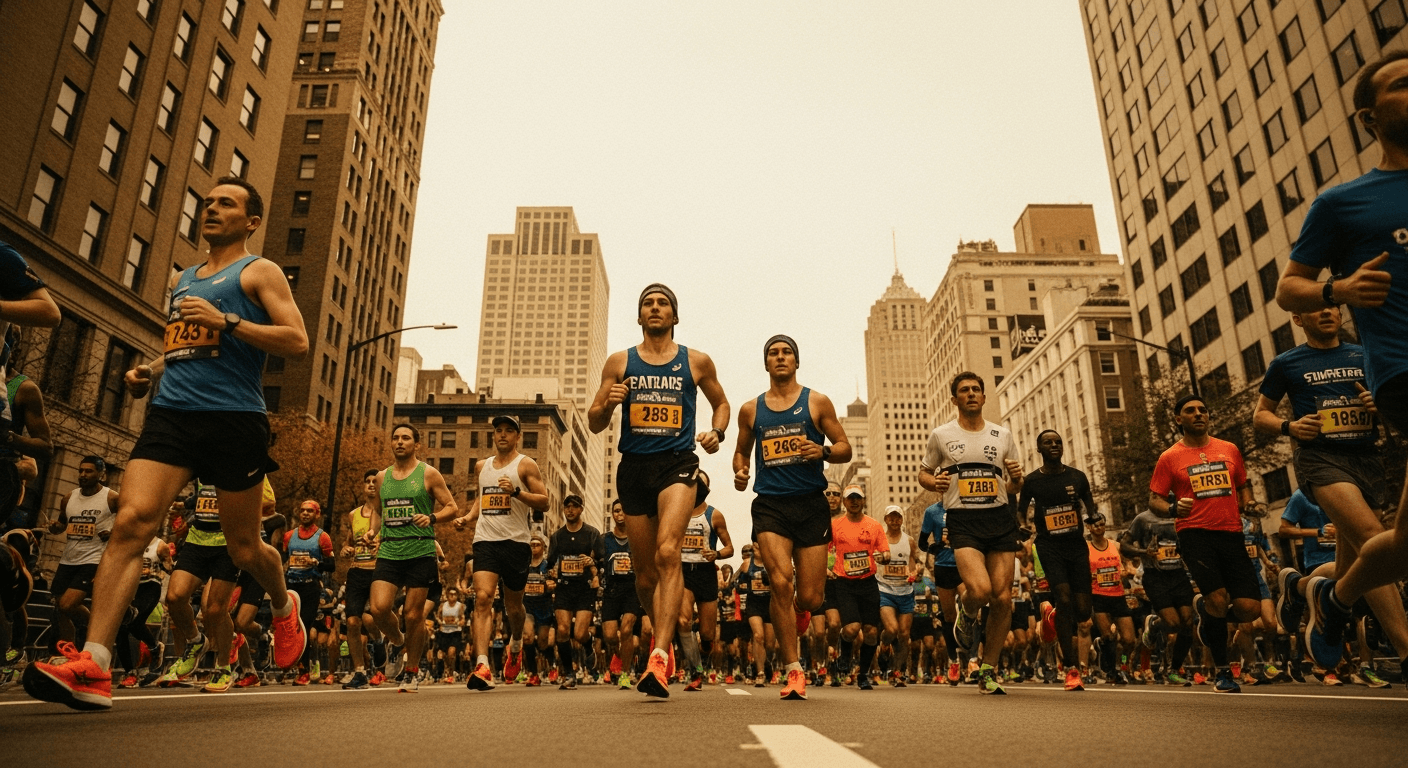
The first weekend of May 2026 packed three of the most-watched US marathons into 48 hours. Pittsburgh, the Flying Pig in Cincinnati, and the Hoag OC Marathon in Orange County. Three races, three different stories, and a set of data points that paint a clearer picture of where amateur and elite distance running actually sits in 2026.
The times are quick. Participation is exploding. And several patterns are becoming impossible to ignore.
Pittsburgh: A Hometown Win and a Three-Peat
Will Loevner, a Pittsburgh native, won the 2026 Pittsburgh Marathon men's race in 2 hours, 14 minutes, and 50 seconds. On the women's side, Jane Bareikis took her third consecutive Pittsburgh title with a time of 2:30:31, becoming the first woman to win the race in three straight years.
The 16-minute spread between the men's and women's winners sits squarely in the average for major US marathons. What stands out is Bareikis's consistency. Three years in a row on a course known for its rolling elevation, surface changes, and the iconic Birmingham Bridge crossing isn't a coincidence. It reflects deep specialization on a specific terrain and a pacing strategy tuned to the course's pressure points: the climb out of the Strip District and the rolling miles between South Side and Mount Washington.
For an amateur preparing for a hilly marathon, the lesson is direct. Consistency on a tough course comes from knowing the terrain and adjusting pace to the key sections, not from grinding out long runs at a flat steady tempo.
Flying Pig: 45,197 Runners, A New Record
The Cincinnati Flying Pig Marathon broke its own participation record this year, with 45,197 runners registered across all distances of the event. That's a major signal about the state of amateur running in the United States in 2026.
It confirms that the post-pandemic running revival seen in 2023 and 2024 isn't a temporary bounce. Regional marathons that combine festival atmosphere, accessible courses, and solid logistics are pulling registration cohorts the sport hasn't seen at this scale before. Flying Pig fits that profile cleanly. The course is challenging but doable, the operations are dialed in, and Cincinnati's running culture is deeply rooted.
On the times, Zach Kreft won the men's marathon and Katherine Hallahan took the women's title in 2:48:43. The winning marks aren't world-record territory, but they're solid given the steep climbs the course throws at runners in the early miles.
Hoag OC: Course Record and Olympic Trials Qualifier
Steven Martinez won the Hoag OC Marathon in Orange County with a new course record of 2 hours, 14 minutes, and 6 seconds. More important, that performance qualified him for the 2028 US Olympic Marathon Trials.
This result reflects a broader trend. Regional marathons are increasingly serving as legitimate qualifying venues for the Olympic Trials cycle. Pre-2023, the bulk of qualifiers came through Boston, Chicago, or New York. In 2026, races like OC, Houston, Grandma's, and Indianapolis offer fast conditions and attract athletes targeting a time rather than chasing the iconic experience — a pattern also visible in the 2026 Boston men's race, where the deepest field in race history set a new course record of 2:03:41.
For coaches and serious amateurs, this shifts the calendar planning. Choosing a qualifying marathon is now as much about course profile and predictable weather as it is about prestige.
The Numbers That Stand Out
Three races, several signals. Participation at a regional marathon like Flying Pig now exceeds what some long-considered destination marathons were drawing five years ago. Sub-2:15 elite times on non-flat courses have become the standard, not the exception. And women are posting increasingly consistent results across regional events, with the generational gap to the 2010s women's leaderboard tightening fast — a trend punctuated globally by Tigst Assefa's women's world record of 2:15:41 at London 2026.
The takeaway for amateurs is more practical. The amateur distance running culture in the US is healthier than it's been in years. Training resources, connected pacing tools, and access to behavioral data from other runners have made preparation more precise for anyone willing to invest the time.
What This Means for Your Own Marathon
If you're prepping for a marathon in the next few months, several practical lessons come out of this weekend. Specialization on a specific course type beats generic training. Bareikis didn't win Pittsburgh three times by training for a flat marathon. She adapted her long runs, hill sessions, and pacing tests to the actual course profile.
The amateur field density is climbing. If you're targeting a specific time, expect to run alongside packs at your pace far longer than a few years ago. That changes both your start strategy and how you manage the mental wall around mile 19 or 20.
And if you're chasing a qualifying time, the choice of marathon is now strategic. Prestige isn't a pacing argument. Course profile, statistical weather, and your hydration and fueling plan on race day matter more than the name on the race kit.
The May 2026 marathons don't just deliver results. They confirm that US distance running is entering a new phase of maturity. Deeper fields, faster times, and amateurs who train like semi-pros.