
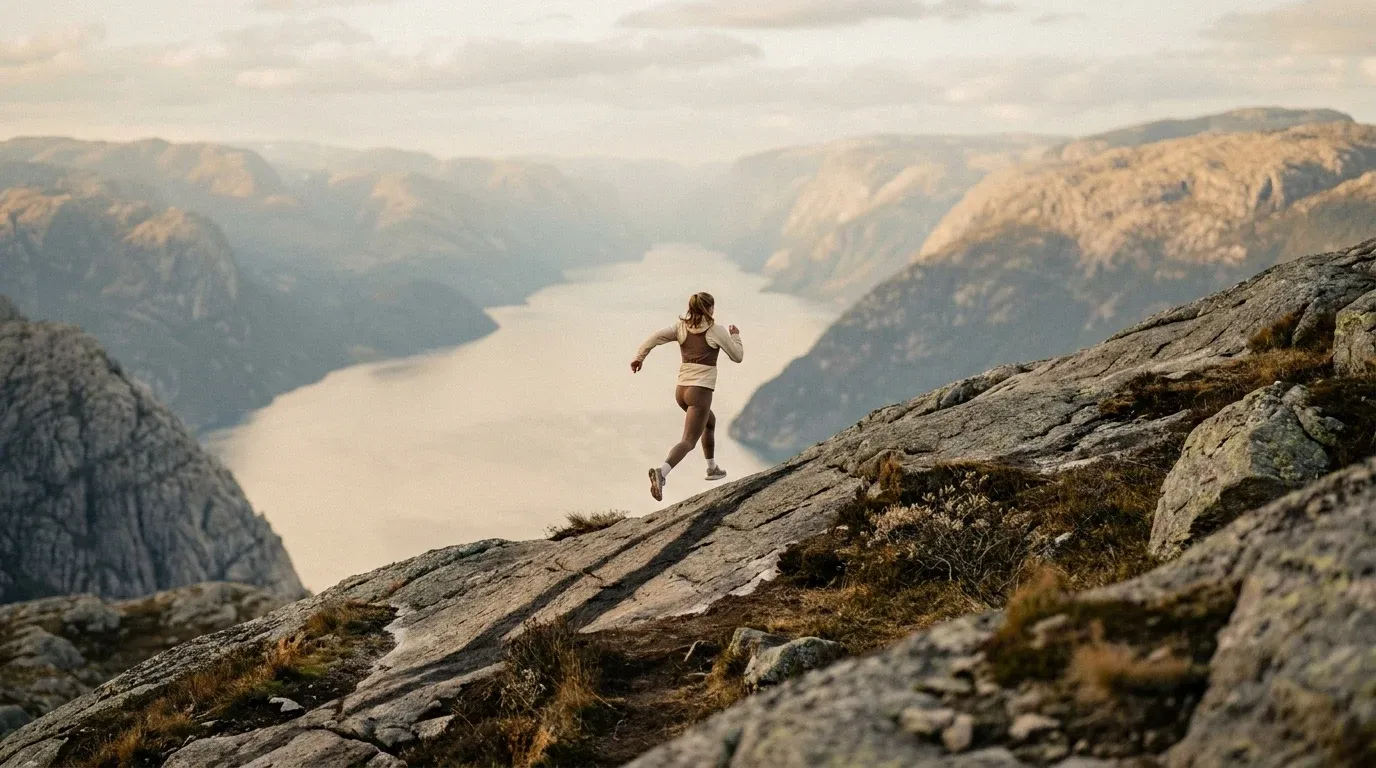
On September 21, 2026, Norwegian elite trail runner Ida Amelie Robsahm died following a fall near the Romsdalseggen summit in western Norway. She was 30 years old. The news moved through the trail running world quickly, quietly, and with the particular weight that only comes when a community loses someone who felt like one of its own.
Robsahm was a member of the Asics Trail team and one of the most respected names in European mountain running. Her death is a reminder of something the sport rarely says out loud: mountains don't make exceptions, not even for the most skilled and prepared athletes among us.
A Career Built on Grit and Altitude
Robsahm's results in 2025 and 2026 marked her as a runner at the height of her competitive powers. In June 2026, she crossed the finish line second at the Marathon du Mont-Blanc, one of the most demanding and prestigious races in the global trail calendar. That performance came on terrain she knew intimately, technical descents and long exposed ridgelines that demand both fitness and judgment in equal measure.
Before that, at the 2025 World Mountain and Trail Running Championships, she placed fourth. A result that close to the podium, on a world stage, signals the kind of athlete who pushes limits deliberately and intelligently. She wasn't reckless. She was exceptional.
Her association with Asics Trail put her in a small group of runners who represent the sport professionally, traveling to races, training in mountain environments year-round, and serving as ambassadors for a discipline that has grown dramatically in participation over the past decade. Marathon crowds are breaking records in 2026, and trail running has tracked that same surge, drawing athletes from road backgrounds who want more technical, more adventurous competition.
What Happened Near Romsdalseggen
The Romsdalseggen ridge is one of Norway's most iconic mountain routes. It runs roughly ten kilometers above the town of Åndalsnes in Møre og Romsdal county, offering sweeping views of the Romsdal valley and the fjord below. It's a route that draws hikers, trail runners, and mountaineers from across Europe. It's also genuinely exposed in sections, with narrow paths, steep drops, and conditions that can shift fast.
Details of the specific circumstances of Robsahm's fall have not been fully disclosed, and speculation isn't useful here. What's known is that a fall occurred near the summit, and that Robsahm did not survive it. Norwegian rescue services responded, but there was nothing to be done.
She was doing what she loved, in terrain she understood, with the kind of experience that most recreational runners will never accumulate. That makes this no less devastating. It may, in some ways, make it harder to process.
The Risk That's Always There
Trail running and mountain running occupy a different risk category than road running. That's not a reason to avoid them. Millions of people run trails and summits safely every year, and the physical and mental rewards of mountain environments are real and well-documented. But it's an honest fact that experienced runners and outdoor athletes sometimes acknowledge only among themselves.
You don't have to be careless for something to go wrong on a mountain. Conditions change. A foothold shifts. A moment of inattention on terrain that demands constant attention. The margins are genuinely thinner above the treeline, and elite athletes, who spend far more time in those margins than anyone else, carry that knowledge with them.
Robsahm's death doesn't mean the mountains are too dangerous. It means they're not safe in the way a treadmill or a flat road is safe. That distinction matters for how the sport talks about risk, and how athletes, coaches, and organizers think about preparation and judgment at altitude.
Mental readiness is part of that preparation. Learning how to mentally prepare for a race is often discussed in terms of performance anxiety and goal setting. But mental preparation in mountain environments also means knowing when conditions aren't right, when to turn back, and when the summit isn't worth the exposure. That kind of judgment is hard-won and deeply personal.
A Community Responds
Within hours of the news breaking, tributes began appearing across social media, race pages, and running community forums. Athletes, race directors, and sponsors posted memories and condolences. The Asics Trail account shared a statement describing Robsahm as a "fierce competitor, a generous teammate, and someone who made the mountains feel welcoming to everyone around her."
That response reflects something genuine about the trail running world. It's a smaller, more interconnected community than road running. Elite and amateur runners often compete on the same courses, share aid stations, and recognize each other by name. The culture tends toward mutual respect and shared suffering in the best sense, the kind that builds real bonds over long climbs and technical descents in bad weather.
Other elite runners who've helped shape that culture in recent years have spoken to the closeness of the community. Maya Rayle, one of trail running's most prominent emerging voices, has written about the particular kind of trust that develops between runners who share extreme terrain. That trust is part of what makes losses like this one land so hard.
The Trail World Cup circuit has also grown in visibility and reach, meaning more runners are competing at higher levels on more demanding terrain. The sport is professionalizing. That brings more resources, better training, and wider exposure. It also brings more athletes spending more time in high-risk environments.
What Elite Athletes Accept
It's worth being direct about something that doesn't always make it into mainstream sports coverage: elite trail and mountain runners make a deliberate choice to operate at the edge of what's safe. That's not a criticism. It's an acknowledgment of what the sport demands and what its athletes sign up for with full awareness.
Robsahm was 30 years old, a professional athlete with years of competitive experience in mountain environments across Europe. She had the fitness, the technical skill, and the course knowledge that most of us will never develop. She also accepted the risk that comes with pushing into terrain where the consequences of a mistake are severe.
That's a deeply personal choice, and it deserves respect rather than second-guessing. Many elite athletes in extreme sports make similar calculations. The outdoor and endurance community has long grappled with how to honor those choices while also being honest about the costs when things go wrong.
What's not useful is pretending the risk isn't real, or framing an accident as evidence of failure. It wasn't. It was a tragedy that happened to someone at the top of her sport, doing the thing she'd committed her life to.
Where the Sport Goes From Here
Trail running won't stop. It shouldn't. The mountains that claimed Robsahm's life are the same mountains that give the sport its meaning, its beauty, and its particular brand of satisfaction. Runners who've spent time on exposed ridgelines know exactly why they keep going back, even knowing the risks.
What grief like this can do, when a community processes it honestly, is sharpen the conversation around safety culture. Not in a way that softens the sport or discourages participation, but in a way that helps athletes at every level make better-informed decisions. Where are you comfortable on technical terrain? What's your protocol when conditions deteriorate? Do you have rescue coverage when you're running remote routes? These aren't questions only for beginners.
The physical demands of mountain running are often what draws athletes from other disciplines. Those who come from gym-based backgrounds frequently discover that outdoor endurance challenges the body in ways no structured program fully replicates. Research consistently shows that exercise becomes more protective and beneficial as we age, and trail running, done thoughtfully and with proper risk management, remains one of the most complete physical and psychological challenges available.
Ida Amelie Robsahm deserves to be remembered for what she was: a genuinely elite athlete who gave her sport everything she had, who stood on top-ten podiums at some of the world's hardest races, and who represented her team and her country with skill and dedication. The trail running world is smaller and quieter without her in it.
The mountains above Åndalsnes are still there. The Romsdalseggen ridge still draws runners and hikers every season. And somewhere on those exposed paths, there will be people who know her name and run a little more carefully, and a little more gratefully, for having known what happened there.