
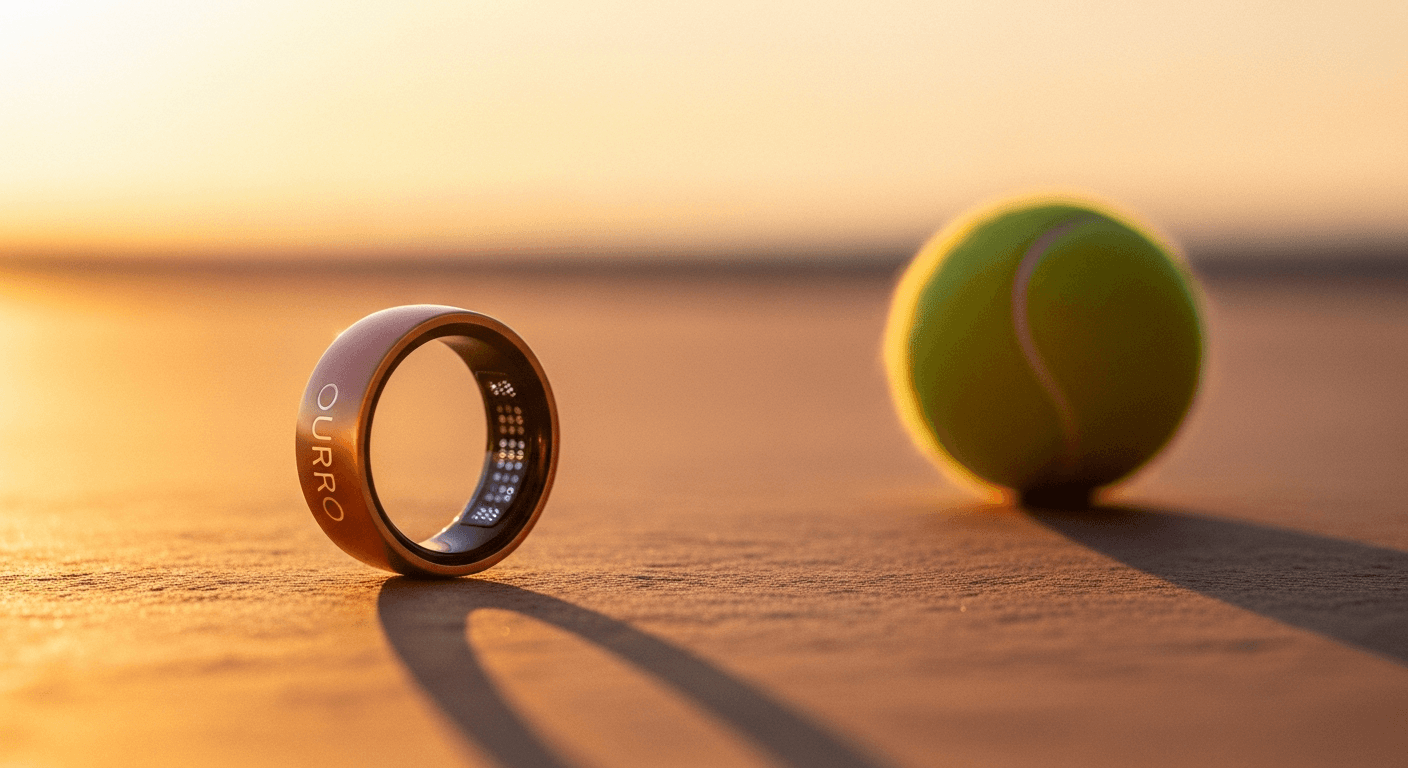
Oura Ring's appointment as the official wearable sponsor of the US Open is not a marketing footnote. It's a structural move that signals how serious health tech brands are about competing outside the wellness bubble and into mainstream consumer culture. If you're building or operating in the fitness technology space, this activation deserves your full attention.
Confirmed in May 2026, the partnership with the United States Tennis Association marks one of the first Grand Slam-level wearable sponsorship deals in professional sports history. The implications stretch well beyond tennis courts and press releases.
Why a Grand Slam Partnership Is Different
Most sports sponsorships are about logo placement. Grand Slam partnerships operate on a different plane entirely. The US Open runs for two weeks, commands broadcast deals across dozens of international markets, and generates sustained media impressions that few other sporting events can match. For a wearable brand, that's not just reach. It's sustained, daily association with elite athletic performance at the highest visible level of the sport.
Supplement brands can't buy that credibility. Apparel brands compete for it at enormous cost. A wearable worn on the wrist or finger of players being watched by tens of millions of viewers is a category of product integration that converts passive awareness into active consumer intent. The device is literally visible during competition.
That's the distinction. Grand Slam media real estate delivers what performance marketing budgets cannot: contextual legitimacy. Oura Ring isn't running a 30-second spot. It's embedded in the visual grammar of world-class sport.
The Market Timing Is Not Accidental
The global sports technology market is forecast to reach $68.70 billion by 2030, growing at a 14.9% compound annual growth rate. Wearables are identified as a primary driver of that expansion, alongside AI-powered performance tracking. Oura didn't enter this partnership into a quiet market. It entered during a capital surge.
Wearable fitness tech funding surged 464% in 2026, based on previously tracked keedia data. That kind of capital deployment intensity means the category is simultaneously attracting serious investment and serious competition. Brands that establish high-visibility positioning now will be significantly harder to displace in three years when the market consolidates around recognized names.
This is the logic behind the timing. When capital is flooding a category, the brands that convert funding into perception advantages early become the default reference points for buyers, retailers, and partners. The US Open deal is Oura's bid to become that reference point for smart ring technology before a competitor does.
The same dynamic is playing out across adjacent fitness verticals. Strava's $2.2B valuation following its May 2026 Sequoia round reflects parallel logic: fitness data platforms with engaged communities are commanding premium valuations precisely because the window for category dominance is open right now, not in five years.
Repositioning Biometric Data as Aspirational
Here's the strategic shift that operators and brand builders should study most carefully. For years, biometric wearables have been marketed through a clinical or wellness-management lens. Track your sleep. Monitor your HRV. Understand your readiness score. That framing works for early adopters and quantified-self enthusiasts. It does not drive mass-market adoption at premium price points.
Elite sports sponsorship reframes the same data as performance infrastructure. When a professional athlete at the US Open is visibly wearing an Oura Ring, the product's story changes. It's no longer about monitoring health metrics. It's about the tools that serious athletes use to compete at the highest level. That is a fundamentally different consumer proposition.
This positioning shift has historical precedent with measurable commercial outcomes. Brands that successfully migrate from clinical or wellness framing to aspirational performance framing have consistently unlocked higher average selling prices, broader retail shelf placement, and faster subscription conversion rates. Consumers pay more for tools that elite performers use than for tools that help them manage chronic conditions.
For Oura, the US Open partnership does that repositioning work at scale, across two weeks of globally broadcast competition, without requiring the brand to change its product at all. The context does the work.
The Subscription Revenue Angle
Hardware alone doesn't build the kind of recurring revenue that investors and operators value most. Oura's business model depends on converting device purchasers into monthly subscribers who pay for access to advanced analytics, personalized insights, and continuous platform updates. That subscription layer is where long-term brand value is built.
Sports sponsorships at this level accelerate that conversion funnel in two ways. First, they drive initial device acquisition among consumers who self-identify as performance-oriented. Those buyers convert to subscriptions at meaningfully higher rates than wellness-passive purchasers. Second, they extend the relationship beyond a single purchase moment. A viewer who sees Oura Ring at the US Open, buys the device, and enters the subscription ecosystem becomes a recurring revenue unit with a lifetime value that justifies the sponsorship investment over time.
This is the same structural logic that premium fitness brands have used to justify major partnership spending for decades. The sponsorship isn't about selling units during the event window. It's about seeding a subscription base that compounds for years afterward.
What the Retail Velocity Effect Looks Like
Grand Slam-level brand associations create what retail buyers call a pull effect. When a product earns sustained media association with elite sport, retail partners respond with better shelf placement, more prominent feature positioning, and more willingness to co-invest in promotional activity. That's not speculation. It's a documented pattern in how consumer electronics and sports technology products earn and retain premium retail presence.
For Oura, this matters because smart rings remain a category that many consumers haven't yet encountered in a physical retail environment. The US Open partnership gives retail partners a story to tell and a sales floor narrative to build around. Athletes trust it. Professionals monitor their readiness with it. That's a retail pitch that converts floor traffic into transactions.
The broader brand strategy dynamics here mirror what's happened across premium lifestyle categories. The $900 billion athleisure market's growth trajectory demonstrates how aspirational performance positioning drives retail velocity across entire product categories, not just individual SKUs. Wearables are following that same arc.
The Playbook for Health Tech Brands Watching This
If you're operating a health tech brand, a fitness platform, or a hardware-software wellness business, Oura's US Open activation offers a replicable framework worth understanding precisely. The core moves are:
- Select partnerships that reframe your product's primary context. The goal isn't audience size alone. It's context transfer. You want the association to change what consumers believe your product is fundamentally for.
- Prioritize sustained event windows over single moments. A two-week Grand Slam generates compounding media impressions. A single match sponsorship does not. The duration matters for perceptual shift.
- Align hardware visibility with performance narrative. Products that are visibly worn or used during competition carry inherently stronger endorsement signals than products mentioned in press release partnerships.
- Build the subscription funnel before the sponsorship fires. If your monetization model depends on recurring revenue, the acquisition infrastructure needs to be in place before mass awareness arrives. New buyers acquired through sponsorship exposure need a frictionless path to subscription enrollment.
- Use the halo effect across retail channels simultaneously. Sponsorship-driven credibility has a shelf life. Coordinating retail placement improvements, promotional co-investment, and channel partner briefings to land during the event window maximizes the commercial return.
This framework isn't limited to devices. Fitness platforms and coaching businesses that invest in credibility-building partnerships at the right visibility level create similar competitive advantages. Life Time's clinical wellness positioning demonstrates how premium brands in adjacent fitness verticals use high-profile strategic moves to shift consumer perception and unlock new revenue streams at scale.
What Competitors Should Be Doing Right Now
The honest read for any brand competing in the wearable or biometric health space is that Oura just raised the stakes for category credibility. A Grand Slam sponsorship establishes a new baseline for what serious positioning looks like in this space. Brands that don't respond strategically risk being perceived as secondary players regardless of how technically competitive their products actually are.
That doesn't mean every competitor needs a Grand Slam deal. But it does mean that remaining invisible in high-credibility sports and performance contexts is now a more costly strategic choice than it was twelve months ago. The category perception benchmark just moved.
The capital environment supports investment. With wearable fitness tech funding at its highest recorded levels and the sports technology market growing at nearly 15% annually, you're not operating in a market where conservative positioning waits for a better window. The window is the current moment.
Oura Ring's USTA partnership is the clearest indication yet that health tech brands have internalized what premium apparel and sports nutrition brands learned years ago: credibility at the elite level doesn't just influence athletes. It shapes what everyday consumers believe is worth buying, wearing, and subscribing to for the long term.
For brand operators watching this unfold, the strategic question isn't whether this approach works. The evidence on that is increasingly clear. The question is who moves next, and whether you're positioned to be part of the conversation when they do.