
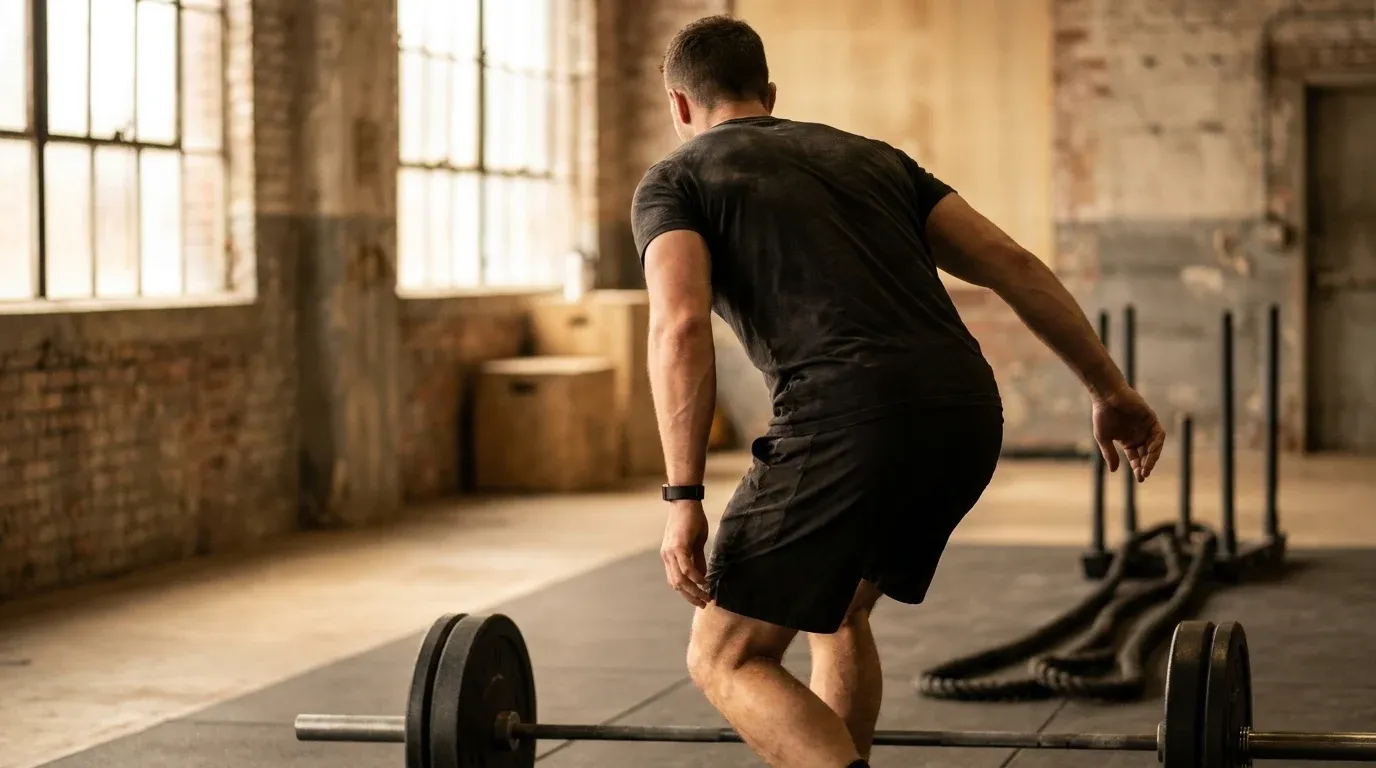
Every year brings a new wave of fitness trends that flood social media for six weeks and then quietly disappear. Q4 2026 is different. The methods gaining real traction right now aren't viral. They're being adopted by serious, consistent gym-goers who care more about long-term results than short-term aesthetics. Here's what's actually working.
Hybrid Strength-Cardio Formats Are Outperforming Traditional Splits
Pure bodybuilding-style splits built around isolated muscle groups are losing ground. Gym attendance data from major chains across the US and UK consistently shows that hybrid formats combining structured lifting with conditioning blocks are driving stronger membership retention and class fill rates than traditional push/pull/legs programming.
The appeal is practical. These formats train strength and cardiovascular capacity within the same session, reducing the total weekly time commitment while delivering measurable results across both physical capacities. Formats like HYROX-style training, kettlebell-barbell hybrids, and timed circuit protocols built around compound lifts have moved from boutique territory into mainstream programming at commercial gyms.
What's driving the shift isn't novelty. It's efficiency and adherence. Research consistently shows that training formats people actually stick to produce better long-term outcomes than theoretically optimal programs executed inconsistently. If you've been struggling to push past a performance ceiling, the structure of your programming matters more than most people assume. Breaking a Strength Plateau: What Actually Works breaks down exactly where most intermediate lifters stall and how format adjustments can accelerate progress.
Expect hybrid formats to continue expanding. Several major gym chains in North America are already redesigning floor layouts to accommodate the dual-purpose equipment demands these programs require.
Wearable Integration Has Become a Mainstream Expectation
Two years ago, athletes wearing WHOOP straps or tracking HRV before adjusting their training load were considered early adopters. That's no longer the case. Wearable data integration has crossed from optional feature to expected standard for a growing share of gym members, particularly those in the 28-45 age bracket who train four or more times per week.
Platform-level partnerships are accelerating this shift. WHOOP has set precedents in how wearable companies partner with training platforms, coaching apps, and even employer wellness programs, embedding biometric-guided programming into everyday workout decisions. The result is a feedback loop that simply didn't exist five years ago: you're no longer guessing whether to push hard today or take a recovery session. The data tells you.
This integration has also raised the floor on what people expect from coaches and training platforms. Clients paying $150 to $300 per month for online coaching increasingly expect their program to respond to wearable data, not just follow a fixed weekly template. Coaches who can't work with biometric inputs are losing clients to those who can.
The hardware side is evolving quickly too. A Wearable Ultrasound Patch Can Boost Your REM Sleep points to where this technology is heading. Recovery tracking is moving beyond HRV and sleep scores toward more granular physiological monitoring. Within 18 months, the gap between what a wearable can measure and what a clinical device can measure will narrow significantly.
Longevity Metrics Are Reshaping How Intermediate Lifters Set Goals
Ask a gym-goer in 2022 what their training goal was and you'd hear some version of aesthetics or strength numbers. Ask the same question in late 2026 and a growing share of responses involve VO2 max, grip strength, and muscle mass maintenance. The longevity conversation has moved out of academic research and into everyday training culture.
This isn't coincidental. A wave of longevity-focused content, physician-led podcasts, and long-form health journalism has connected the dots between training habits in your 30s and 40s and functional capacity in your 60s and beyond. The research backing these metrics is robust. VO2 max is among the strongest predictors of all-cause mortality. Grip strength correlates with cardiovascular health, cognitive function, and independence in later life. Muscle mass in your 40s predicts metabolic health decades later.
What this means in practice is that intermediate lifters are recalibrating their benchmarks. Instead of optimizing exclusively for a one-rep max or a physique milestone, they're asking harder questions: Am I maintaining cardiorespiratory fitness? Am I building the kind of muscle that will matter in 20 years?
This shift also changes how people approach training frequency. The question isn't just how much you can do. It's how little you need to do to preserve what you've built. How Often Do You Actually Need to Train to Keep Muscle? addresses this directly, covering the minimum effective dose research that's become increasingly relevant to this cohort of longevity-aware lifters.
Recovery is now being treated as a training variable rather than an afterthought. That includes sleep quality, stress load, and nutritional support. Stress Is Still the Leading Trigger for Chronic Illness is worth reading in this context, particularly if your training results have plateaued despite consistent effort. Chronic stress suppresses adaptation in ways that no amount of extra training volume can overcome.
Longevity Training: What You Should Actually Be Measuring
If you're in the intermediate-to-advanced category and haven't yet integrated longevity markers into your programming, here are the metrics worth tracking:
- VO2 max: Measurable via most modern smartwatches or through lab testing. Even rough estimates are useful for tracking directional change over months.
- Grip strength: A simple dynamometer test. Norms exist by age and sex. Declining grip strength is an early signal worth taking seriously.
- Muscle mass or lean body mass: DEXA scans are the gold standard, but bioelectrical impedance scales can track trends if used consistently under the same conditions.
- Resting heart rate and HRV: Both respond to training load, recovery quality, and overall physiological stress. Week-to-week trends matter more than individual data points.
- Zone 2 capacity: The ability to sustain moderate aerobic output is closely tied to mitochondrial health and long-term cardiovascular resilience.
None of these require expensive equipment or clinical access to start tracking. The point isn't perfection. It's directional awareness over time.
Social Media Fitness Credibility Is Fracturing
Something significant is happening to the fitness creator economy. Following a sustained wave of research linking certain types of fitness and body image content to negative psychological outcomes, particularly among younger audiences, the community is splitting. A meaningful segment is migrating away from physique-driven content toward evidence-based creators who cite research, acknowledge uncertainty, and prioritize health over aesthetics.
This isn't the whole picture. High-follower physique accounts still generate enormous engagement. But advertiser behavior is shifting. Brands in the supplement and equipment space are beginning to diversify partnerships toward credentialed creators, partly for brand safety reasons and partly because the evidence-based audience converts at higher rates and with stronger loyalty.
The practical implication for you is a better signal-to-noise ratio, if you're selective about your sources. The fitness information environment in late 2026 has never been more saturated, but the gap between high-quality and low-quality content is also widening. Peer-reviewed research, physiology-grounded coaching, and nuanced takes on topics like nutrition and recovery are more accessible than ever.
Speaking of recovery, the debate about which interventions actually move the needle continues. If you're spending significant money on recovery tools and tech, it's worth checking your assumptions. Cheap Recovery Often Beats Expensive Tech challenges some of the more expensive defaults in the recovery space with direct, evidence-grounded comparisons.
What These Trends Have in Common
Look at each of these developments and a pattern emerges. The fitness culture that's gaining real traction in late 2026 is less interested in extremes and more focused on sustainability. Hybrid formats prioritize adherence. Wearables reward self-awareness over ego. Longevity metrics extend the planning horizon. Evidence-based content demands accountability.
This isn't a soft or less ambitious version of fitness culture. It's arguably more demanding, because it asks you to track harder variables over longer time horizons and resist the shortcuts that dominate your feed. The serious gym-goers getting consistent results right now are the ones who figured out that sustainable, data-informed training beats intense, inconsistent effort almost every time.
If you want a broader picture of what's shaping training culture this year, The Fitness Trends Actually Dominating Right Now covers the wider landscape with the same evidence-first lens.
The noise hasn't gone away. But the signal is getting stronger for those paying attention.