
Last updated: June 4, 2026
Creatine is the most-studied supplement in sports science history — but its reputation still belongs to young bodybuilders chasing size. That's wrong. 2026 research shows that for adults over 50, creatine has a three-category case: muscle mass preservation, bone density support, and emerging cognitive protection. This guide synthesizes the current evidence.
Key Takeaways
- Muscle: 3–5g/day maintains or improves lean mass combined with resistance training in 50+ adults
- Bone: creatine + resistance training shows significant bone mineral density improvements in post-menopausal women
- Brain: the 2026 CABA trial showed 30% slower cognitive decline in early Alzheimer's — via brain phosphocreatine mechanism
- 2026 meta-analysis: 83.3% of studies found a positive creatine-cognition relationship in older adults
- Dose for 50+: 3–5g/day continuously — no loading phase required
Table of Contents
- 1. Creatine and muscle after 50
- 2. Creatine and bone health
- 3. Creatine and cognitive health
- 4. How and when to take creatine
- 5. Safety and contraindications
1. Creatine and muscle after 50
After age 50, sarcopenia (age-related muscle loss) accelerates. Without intervention, adults lose 1–2% of muscle mass per year starting at 50, and up to 3% per year after 60. Creatine, combined with resistance training, measurably slows this process.
A study in the Journal of Strength and Conditioning Research compared two groups of adults aged 59–77 over 10 weeks: resistance training alone vs resistance training plus creatine. The creatine group showed statistically superior gains in lean muscle mass. The effect is consistent across multiple systematic reviews: creatine enhances the anabolic response to resistance training in older populations, even if absolute gains are smaller than in younger adults.
The mechanism: creatine increases intramuscular phosphocreatine stores, allowing sustained intensity during work sets. For older adults who tend to reduce load, this extra available energy can make the difference between an effective session and an understimulating one.
2. Creatine and bone health
The least-discussed angle but one of the most interesting. Multiple studies have examined creatine's effect on bone mineral density, particularly in post-menopausal women. A Cochrane review analyzed several RCTs and concluded that creatine combined with resistance training significantly improved bone remodeling markers vs training alone.
The explanation: creatine improves resistance training performance — more load, more volume. And it's the mechanical stimulus on bone (load + impact) that triggers bone formation. Creatine doesn't act directly on bone — it improves the stimulus that, in turn, strengthens bone. For post-menopausal women at elevated osteoporosis risk, this is an additional argument for combining creatine with resistance training.
3. Creatine and cognitive health
This is the most active research front for creatine in 2026. Two data sources converge:
The 2026 Nutrition Reviews meta-analysis. Published in February 2026 in Nutrition Reviews (Oxford Academic), this systematic review included 6 studies with 1,542 participants. Result: 83.3% of studies (5 out of 6) showed a positive relationship between creatine supplementation and cognitive function in older adults. Biggest improvements: short-term memory, processing speed, and attention.
The CABA trial (2026). Conducted by the University of Kansas Medical Center, this clinical trial in early-stage Alzheimer's patients found 30% slower cognitive decline with creatine monohydrate vs placebo. Proposed mechanism: creatine restores phosphocreatine reserves in neurons, supporting brain energy production where brain metabolism is already impaired.
Important nuance: most cognitive studies were conducted in healthy older adults or those with mild decline — not exclusively Alzheimer's patients. Benefits appear stronger when dietary creatine intake is low (vegetarians, vegans, light meat eaters).
4. How and when to take creatine
For adults 50+, the protocol is simple and doesn't require a loading phase.
- Daily dose: 3 to 5g of creatine monohydrate per day
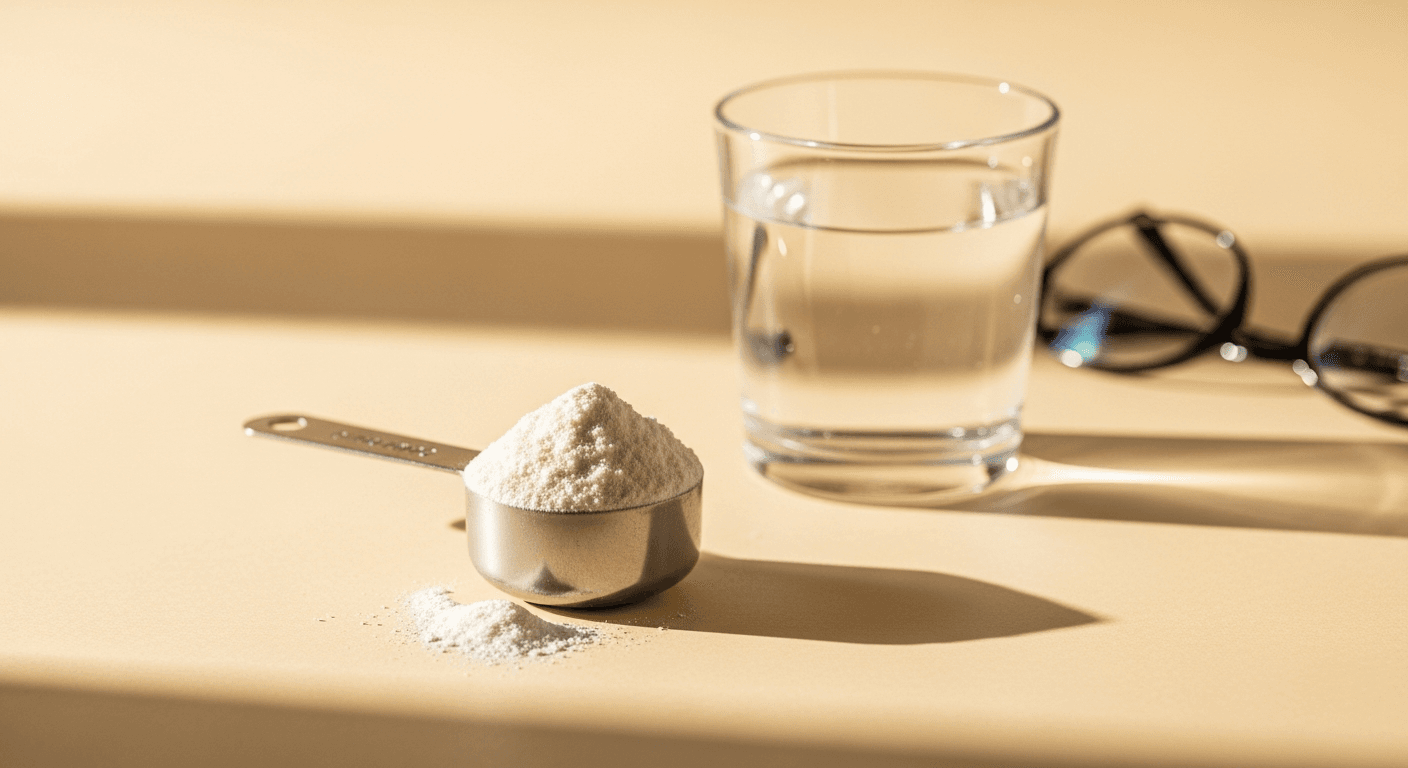
- Form: Creatine monohydrate powder (most-studied, cheapest, most effective)
- Timing: Not critical. Post-workout or with a meal works fine
- Loading phase: Optional (20g/day for 5–7 days saturates stores faster). For 50+, continuous intake without loading is sufficient — no reason to stress the system unnecessarily
- Duration: Continuous. No scientific evidence supports cycling creatine
5. Safety and contraindications
Creatine has one of the best-documented safety profiles of any supplement. Decades of research on thousands of participants have found no meaningful adverse effects at standard doses in healthy adults. The myths about dehydration, cramping, or kidney toxicity are not supported by current data.
Cases requiring medical consultation:
- Pre-existing kidney insufficiency: consult a physician before supplementing
- Polypharmacy (common after 60): check potential interactions with current medications
For the vast majority of generally healthy adults aged 50–80, creatine monohydrate at 3–5g/day is safe and well-tolerated.
Frequently Asked Questions
Does creatine cause weight gain?
Yes, initially. Creatine increases intramuscular water retention, which can add 1–4 lbs in the first few weeks. That's water inside the muscle, not fat — and it contributes to the fuller appearance and improved recovery.
Should you cycle creatine?
No. There's no evidence that on/off cycles improve outcomes. Continuous daily supplementation is the research-validated approach.
Does creatine work without training?
Muscle benefits are maximal when creatine is combined with resistance training. Cognitive benefits appear to be somewhat independent of exercise — but physical activity amplifies the overall response.